Rooted in Faith, Growing in Mission; a personal faith presentation for Bethlehem Lutheran Church

What follows is the content of a faith and mission talk I am delivering to all 4 services at Bethlehem Lutheran Church in St. Charles, IL. on October 20 and 21st. The theme of the talk is Rooted in Faith, Growing in Mission.

Several congregants have been invited to share their faith stories and how it has helped them overcome challenges, create blessings and plan for the future. Here is the content of my speech.

 Christopher and Linda Cudworth, Evan and Emily

My wife Linda and I took very different paths to faith in our lives. She was raised in a conservative church with a parochial school education.

I grew up as a Presbyterian, but went on to attend Luther College in Decorah, Iowa, where all Lutherans seem to be Norwegian, or all else all Norwegians seem to be Lutheran. I never completely figured out which was which.

All these contradictions in our faith background are proof that opposites really do attract. But when we got married my wife did not want our children Evan and Emily to be raised by a pack of Norwegians (God Forbid) so we got married and baptized our children in the same church synod with which she grew up, joining St. Mark’s Lutheran in St. Charles in 1985. We worshipped there for more than 25 years.

Linda and I both taught Sunday School for years, and I sang in the choir and served on the Board. And of course, like all good Lutherans, we pretty much sat in the same pew every week.

Linda continues to work as a Preschool Teacher at St. Mark’s Preschool where in 17 years she has educated hundreds of children on the joys of learning and the love of Christ.

About 10 years ago I was invited to pick up my guitar and join the Praise Team at St. Marks. It was a great joy to become immersed in music, a joy all my life.

Joining the Praise Team coincided with some very big challenges in our lives. Linda was diagnosed with ovarian cancer in 2005, and has since been through numerous chemotherapy treatments, surgeries and continues treatment with side effects in trying to beat the disease. She is a both a brave and God-fearing woman, so it has been an intense journey trying to reconcile these difficult years with God’s plan for us.

We have learned that God uses all kinds of channels to reach out to people if you are prepared to listen and accept their grace and kindness.

As caregiver to my wife it has been my responsibility to oversee her needs and recruit help where we need it, especially with a care group that has delivered many meals to our home when needed, provided rides to treatments and delivered many prayers and visits for our practical and spiritual needs.

I am also caregiver to my father, Stewart Cudworth, who is a stroke victim and at 86 years old is still quite sprightly. He can be a handful at times, but it has been a blessing to be there for him since my mother passed away in 2005.

We’d like to share an anecdote that illustrates some of the interesting ways God plays a role in our lives. In 2007 during one of Linda’s chemotherapy regimens,  she really needed me with her, and no one else would do. As it turned out, the new job with great pay that I’d just taken came to a sudden end when the firm lost a major client. Yet the day after Linda was declared to be in remission after half a year of intense chemotherapy and surgery, I landed a new job. It wasn’t a perfect job in many ways, but it was close to home and that counted for a lot in those transitional times. It seems that often the answer to our prayers is not always riches or perfection, but God delivers strength and patience.

Allow us also to share a quick perspective on some of the realities of living with cancer.  Despite all the supposed laws about health privacy and supposed protection for those facing critical health issues, if a company wants you off its payroll and its insurance, it will find a way to do so. One firm literally fired me the day after they discovered my wife was in cancer treatment Another tried to force us off their insurance before letting me go. At those times you literally must put your trust in God that things will work out. We will admit that we have wondered out loud why life has to be so hard at times, challenging God, as it were, to answer us. But He always has. We can tell you that in all confidence.

It is not easy in some ways to reveal these very personal travails in front of a congregation like this. It is seemingly more comfortable, in many respects, to keep your problems to yourself in a society that so values material success and the appearance of self confidence and self-control.

But we have learned through prayer and precious help from others that God does not want you to hide your problems. God’s kingdom is in fact formed on a foundation of helping others in need. As beneficiaries of so much help, we have at times sat helpless and grateful, crying at the dining room table over the kindness and insight of others. Times like these are both humbling and inspiring. So we believe that if we do not share these experiences, then others are the poorer for not knowing of the existence and impact of God’s true grace.

About two years ago we began visiting Bethlehem Lutheran Church for reasons we knew in part, but which became evident to us in full clarity once we heard the mission and values of this congregation and its disciples. We almost immediately knew that his church wonderfully captures the spirit of what we believe about the wonder of creation and care for the earth, this church’s respect and care for the poor, its open tolerance and love for all people, and especially its belief in willing discipleship. We found it a joy to attend services here at Bethlehem, and were greeted warmly on many fronts. We are especially grateful to Pastor Mark Larson and Kelly Collins, Pastor Rich Zawistoski and staff members who have been important to us in many ways. All these faithful people, along with old and new friends at this church have helped usher us into this community of believers, and we look forward to what comes next.

We officially joined Bethlehem a year ago in October of 2011. But just as Linda and I were assessing how to get more deeply involved as church disciples we met another round of challenges related to her health and my employment, again as a result of insurance issues.

Bethlehem has helped us through these challenges, building our resolve with encouragement based in the love of God. Bethlehem has helped us strategize and resolve our immediate financial challenges and fulfilled our need for spiritual support. It is hard to describe what this has meant to us, because we still feel like rookies in the congregation, hardly deserving of such attention and care. Yet the miraculous work of God appears not to be parceled out by God by time or quantity, but in measures of concern and fulfillment.

These acts of service and love toward us have been inspirational. We have tried to respond by being a blessing to others wherever we can. It is now our privilege to get involved in service to the church, and my work as a Confirmation Mentor has already returned so much in terms of spiritual enlightenment.

Here is an encouragement to you all: The time we put in working with youth, or helping fellow church members who might be struggling with emotional, social and financial issues is a true expression of the kingdom of God. This little talk I’ve delivered today is our way of sharing that if you ever need a way to refresh your faith, get involved. Educate the youth. Serve the elderly. Find a path to assist the poor. Help the earth. Your discipleship will magnify your faith in ways you cannot imagine. That is grace, appreciated.

One of my favorite sayings is from a book titled Ambiguous Adventure by Cheik Hamidou Kane. It is written from the perspective of an expatriated African living in France, who realizes that his “new home” is really with God, and not focused in any one place, nor with his greatest prior influence, a teacher he loved. The saying goes, “The purity of the moment is made from the absence of time.” What this means is that when you are doing something that you love, time literally expands to allow you to enjoy and immerse yourself in it. That is the Kingdom of God for me in a nutshell, and we certainly see that work of God in evidence here at Bethlehem. We thank this church for its heart and its care, and look forward to celebrating the life of Christ and the call of God together.

Thank you, and God Bless you all.


Christopher Cudworth


Bird migration from the perspective of creationism and intelligent design


Did birds walk or fly to Noah’s Ark. Or run?

Birds are clearly sinners. Of the worst kind.

Otherwise, why would birds be forced every fall to fly thousands of miles south to warmer climes, only to fly back again in the spring?

According to a literal interpretation of the Bible, God has always punished animals for their sinful nature. For example, Genesis 3:14: “So the LORD God said to the serpent, “Because you have done this, “Cursed are you above all livestock and all wild animals! You will crawl on your belly and you will eat dust all the days of your life.”

Well, it seems that serpents or snakes have gotten off easy, doesn’t it? And given that the serpent represents Satan himself in this passage, how much worse must birds be compared to the plight of serpents?

If we take the Bible literally, God does seem to have a rather low opinion of birds in general. Matthew 6:25-34 “Therefore I tell you, do not worry about your life, what you will eat or drink; or about your body, what you will wear. Is not life more than food, and the body more than clothes? Look at the birds of the air; they do not sow or reap or store away in barns, and yet your heavenly Father feeds them. Are you not much more valuable than they? Can any one of you by worrying add a single hour to your life ? …

God also reportedly wiped out all the species of animals in the world, with exception of specimens that supposedly snuck onto the ark.

Genesis 7:23 “Every living thing on the face of the earth was wiped out; people and animals and the creatures that move along the ground and the birds were wiped from the earth. Only Noah was left, and those with him in the ark.”

That would be some 10,000 or so species of birds, including penguins, who must have walked or swam one helluva a long way to make it from the Antarctic to the deserts of the Middle East. That’s where the ark supposedly gathered all the species of animals and insects of the world. Granted, birds are known for the miraculous migratory abilities, but it seems truly unlikely that the flightless Kiwi or the flightless cormorants of the Galapagos archipelago were able to cross oceans and land to walk up onto an ark.

But perhaps creationism is right about these things, and birds really did use their migratory capabilities to travel from all points around the world and end up in a cramped ark with enough insects to eat, nectar to ingest, seeds to consume and gravel to put in their crops so they could digest their food. There must have been mounds of bird poop and guano so deep from 20,000 birds, and yet 7 people on the ark somehow managed to tend to all these species for 40 days and 40 nights and not lose a single bird.

Then when the worldwide flood supposedly subsided, Noah kicked all the birds out of the ark and forced them to walk and fly all the way back to the islands of Madagascar, the ice floes of the arctic, the deep forests of Brazil and Ecuador, the deep jungles of central Africa and the fearsome plains of southern Africa. That was the first bird migration, you see.

According to the Bible and creationism, birds perform one important function in relation to human beings. They eat them when they’ve died. Isaiah 18:6: “They (human enemies) will all be left to the mountain birds of prey and to the wild animals; the birds will feed on them all summer, the wild animals all winter.”

The Bible also blames birds for all sorts of trouble. Luke 8:5 “A farmer went out to sow his seed. As he was scattering the seed, some fell along the path; it was trampled on, and the birds ate it up.”

In the end, birds seem to be little more than a measure of what a man is worth. Matthew 10:31: So don’t be afraid; you are worth more than many sparrows.”

So, it is no wonder that those who believe in the creationist version of bible interpretation hold bird migration in little apparent respect. The Bible hardly mentions migration, and only in reference to flocks of birds, but not their great travels. How disappointing for an arctic term to make such a long annual journey from Arctic to Antarctic and back with not a mention in the Bible?

It is sad the Bible disrespects bird migration so badly. But the creationist worldview insists instead the God throws birds around like seed in a field. They sprout up from nothing, and are not apparently affected in their life cycles or development from one species into another despite mounds of evidence that birds have ancestors in feathered dinosaurs, and that bird migration is a natural and evolutionary response to climactic changes brought on by the seasons.

No, creationism doesn’t need all that supposedly scientific mumbo-jumbo to explain bird migration. See, it all started when all those birds had to crawl, walk, fly, hop, swim and otherwise hump along to the ark. Then they had to do it all over again to get back to their native habitats, finding plenty of food along the way despite the horrid devastation of a worldwide flood. Apparently fully developed species of jungle flowers cropped up along the path of tropical hummingbirds and fruit eaters.

Giant Skuas must have fed on carrion, and the vultures might have had a field day in the days following the great flood. But then the other birds had to breed like crazy to provide enough food for their ravenous cousins. Relax, it’s all part of God’s plan.

And if you want to brand God’s plan by calling it “intelligent design,” we can suppose that will work just as well to explain the intricacies of bird migration. Intelligent design says that nothing in nature happens without God’s hand getting involved. But God would have to be a major control freak and just a bit callous to send a band of hummingbirds across the Gulf of Mexico into a tropical storm that blasts them all down into a salty brine where they become food for oceangoers. That’s not intelligent design. That’s stupid design. But perhaps we need a new brand of science called Stupid Design Theory to explain all the waste and death God seems to foist on birds each year during migration. Add in bird strikes on windows, millions of birds killed on urban structures like skyscrapers, birds killed by cats and dogs and birds simply falling out of the air dead from exhaustion. All quite intelligent, wouldn’t you say?

So when you walk out in the height of autumn bird migration, do not think that you are witnessing one of the miracles of evolutionary adaptation. Those birds are all practicing their journeys in case God gets pissed off all over again and decides to break His promise as stated in Genesis 9:13: “I have set my rainbow in the clouds, and it will be the sign of the covenant between me and the earth.” Then the rest of us will get no warning…but two of every type of 10,000 species of birds on earth will begin a long journey back to the New Ark, wherever that may wind up (perhaps in South Florida where there are plenty of cruise ships, although their safety records of late are not so good) to climb on board for another re-creation of creation. God might love a little deja vu. The Left Behind people seem to think so. Is the Rapture nothing more than a spiritual migration for human beings? Starts to make you think, now doesn’t it?

Yes, creationism is a wonderful worldview because it explains bird migration so easily. Forget about birds navigating by the stars or landmarks. Forget about the heroic efforts of modern day scientists to teach populations of cranes to learn new migration routes. And especially, forget about all those fall warblers timing their passage cleanly with their insect food sources in the advent of fall, or all those ducks winging their way south on November breezes. Don’t worry your little heads about bird migration at all. God has it all figured out. Birds are just pawns in the paw of the universe.

Now go out and elect a God-fearing politician. They really do know what’s best for you, and science to boot.

Infographic on Conservative vs. Liberal Issues in America

By Christopher Cudworth

Map of Issues.Cons.vs.Lib

In 2007 while completing the manuscript for The Genesis Fix, A Repair Manual for Faith in the Modern Age, I created an infographic (see link above) categorizing the ideologies and how they relate “across the gap” of issues. Clicking on the link above will open the map in PDF form so that you can review it.

What this chart does is illustrate the dividing points and how they are expressed in practice and policy. What this chart does not do is attempt to illustrate ways to bridge the gap.

In The Genesis Fix I propose that this chart does show the way to common ground, but not in ways you might think. Real reconciliation requires going back to the core values of each ideology, and look for common ground there.

If we focus on the religious side of conservatism and liberalism, we find that these two factions regularly resort to the Bible for foundational support on their respective positions.

For example, conservatives cite the word “dominion” in the book of Genesis as a clear sign that God has given the world over to purposes determined by humans to be necessary.

Meanwhile, liberals cite more than 1000 other passages that contradict the notion of dominion, converting that word into a commitment to stewardship of creation.

If we trace back all the issues on this chart to their sometimes biblical sources, we find similarl value displacements and disagreements over what our “fundamental” values really mean.

In the next blog I will elucidate the nature of some of the opportunities available to conservatives and liberals, and how they truly can “bridge the gap” by challenging some of the presumptions held by each side.

The Pledge of Allegiance was written by a Christian Socialist. Now what?

Here is one of those things you learn when you delve into one of those bathroom readers stored in the water closet of every bed and breakfast in the country. Shocking thing, really. At least if you’re one of those people who assumes that traditions such as reciting the Pledge of Allegiance were handed down straight to the human race from God or the Father of Our Country. But those people seldom really are correct. And so it is with the Pledge of Allegiance, which was written in sort of a publicity stunt for a magazine titled The Youth’s Companion, a family magazine similar to The Readers Digest of today.

You can look it up, or read about it in a bathroom reader like I did. Which prompted one of those “Well, huh…” responses with a shoulder shrug that had nothing to do with the business in which I was engaged. Instead, the information dump was profound to me, that we’ve been had, in a way.

According to one of those humble little Internet source pages that was authored in the predawn of the digital age around 1992 and has not been radically altered since because simple facts don’t really change and do not therefore require a fancily designed website, the Pledge of Allegiance was authored in 1892 by a Baptist Minister named Francis Bellamy. Now, before we get too far into the story, let us stop and consider that back when Bellamy was writing, the word “Baptist” did not automatically refer to some close-minded person who hates Darwin and votes Republican. Instead, Bellamy seemed a rather liberal type by comparison,

Drought, God and Human Enterprise

Emerald beetle on dry ground

Drought over much of America has parched the soil

The problem Christians face in consideration of natural disasters such as drought, floods, tsunamis, earthquakes, tornadoes and fires is that Christianity itself seems conflicted about so-called “acts of God.”

Even insurance companies bent on actuarial accuracy have been known to use the phrase “act of God” to describe weather and other natural phenomena gone out of control.

The current challenge over much of North America is drought. It appears that among all dangerous results of climactic conditions, drought may be the most pernicious of all when it comes to the ability of the human race to address its impact on agriculture and other enterprise.

We take for granted that it will rain sooner or later. But in an economy teetering from the effects of human foul play and political stupidity, a natural disaster such as drought can prove to be a tipping point. The Depression of the 1930s and the Dust Bowl proved that point. We apparently have not learned much from the experience. Industrialized farming, while something of a miraculous invention, still cannot make up for the fact of no rain. Crops still need water, and irrigation cannot currently compensate for millions of acres of parched corn and beans.

So where is God in all this? Surely there are plenty of farmers and perhaps a few corn and bean speculators praying for rain so that some sort of crop emerges from the summer of 2012. Yet there may be just as many commodity speculators praying against rain so that their margins or profits or product estimates will prove true so that they can somehow corner the market and get rich as royal thieves.

Does God listen to their prayers as well? Does God answer prayers for wealth, especially ill-begotten wealth that would be the result of human suffering?

If we take the world at face value we might surmise that God does answer the prayers of the evil as well as the good. With wealth rising to the top of American society at previously unseen rates, one thinks of Bible passages such as these: “Will not all of them taunt him with ridicule and scorn, saying, “‘Woe to him who piles up stolen goods and makes himself wealthy by extortion! How long must this go on?” Habakkuk 2:5-7.

Well, woe is relative, and the rich sometimes don’t seem to feel it, or much of anything with regards to other human beings. They even suppose to feel favored by God.

While much of middle-class America has been struggling along since the economy ratcheted up to a crash under the watch of George W. Bush, the wealthy largely rebounded from stock market losses and are doing just fine, thank you. So where is God’s justice in these circumstances?

It has always been that way. And it will always be that way. Achieving justice in this world often requires much effort and human enterprise, for evil in this world is industrious, greedy and pathologically uncaring. That certainly does not mean that all wealthy people are evil. But it does mean that those who are can do great harm.

But nature can be just as capricious. The world is designed, if you want to call it that, to operate on random forces that include natural disasters and even evolutionary twists of fate. So the drought of 2012 is neither unimaginable to God, or unexpected. Some people automatically throw stones at the nation for its supposed sins, accusing America of “tolerating” a list of ostensibly evil activities ranging from abortion to homosexuality, promiscuity to lack of church attendance. Yet it’s funny how seldom those same prophets seem to admonish America for its inequality in wealth, its obsession with violence and its disenfranchisement of the needy and poor. Those themes are much more prevalent in the Bible, yet the crowd that likes to say that God is punishing America for its sins almost always ignores the sins of power. The reason? Too often the supposed prophets are in political alliance with the rich and powerful, thus compromising their ability to speak for God.

It seems that same bible-thumping crowd likes to deny the random fact of evolution, preferring to insist that God is in control of every moment and event in time, like some OCD control freak of a deity. But that worldview does not square with the reality of free will in the world, or the fact that human beings are free to choose in belief in God and Christ. God may indeed be “in control,” but we make our own choices about what elements of God’s universe we seek to embrace, evil or good.

So we persist in a dysfunctional relationship with the influence of God in the world, throwing faith at the idea that it will someday rain while denying that it might be our own, human activities that could be contributing to the current drought.

Indeed, global climate change is the product of human beings burning fossil fuels at alarming rates. Yet the people who favor a nation bowing down to the interests of the very wealthy, and industrialists to boot, insist that holding polluters accountable will harm our economy. How ironic. It’s almost like they can’t see the forest for the trees. Hence the organic symbolism is doubly lost.

That is so narrow-minded as to deny the very existence of God, who the Bible says favors the actions of the just and prudent among us.

So these are the lessons of Drought, God and Human Enterprise. Without recognizing the consequences of our own behavior, God cannot (and will not) help us solve any of the problems we face, be they natural or manmade disasters. Our preparedness and humility in the face of such circumstances may help us attain the collaboration and response necessary to prevent the inevitable natural disaster from becoming fatal to ourselves. If you read the Bible carefully, that is most of what God has done for the human race through great leaders.

God despises however, those who act in His name for gain in personal wealth and power, especially through extortion, calculated speculation and manipulation of people through deceptive words. One cannot help but realize that an evil game is being played by people who deny the massive evidence from science that global warming is real, and that natural disasters, including drought, may be worsened by our own aggressive folly. That is true also of pollution by pesticides, heavy metals, atmospheric degradation and even genetically modified crops and animals. Simply put: We’re messing around for profit and in the process may be losing our grip, and our souls.

On Praying for Colorado

I am a religious person who prays every day. I believe those prayers have been answered in ways that exceed the ability to comprehend or imagine how it happened.

Having been the beneficiary of answers to my prayers, and to those of others praying for me and us (wife and family) it makes spiritual sense to return the cosmic favor and pray for others as well. Now people are asking for prayers for Colorado.

And I will pray for the people whose lives are being turned upside down and burned to rubble as wildfires consume acres and acres of Colorado forest. As recently as November 2011 I walked in those hills near Colorado Springs. Hiked up in the cool morning air for a look around, and saw rings of snow lacing the mountaintops, much higher than where I stood.

The red rocks of Colorado crunched underfoot. Tiny stubborn oak trees with miniature leaves clung to the crumbling ground. Colorado seems to be eroding by the inch in fact. The hot sun beats down all summer, tanning the rocks themselves perhaps, and giving the skin of Colorado visitors and residents that ruddy feel of mountain peoples. It is a unique place.

People have turned Colorado into an environmental plaything. Miles of hiking trails run up into the hillsides above Colorado Springs, home to an Olympic training center and epicenter for the Colorado good life. To the immediate west the Rockies jut higher and higher into the sky, to 14,000 feet in places. Trees cease being able to exist above certain elevations. The gray and red rocks of real mountains stand stubborn against the sky, thrown up by tectonic forces deep within the earth. The entire ridge of the Rockies runs from the southern United States far into the Canadian wilderness. People settle in towns all along the Continental Divide. Other vacation there, drafting on the mountain air and dipping toes into cool lakes or raging meltwater rivers.

The mountains are so profound it is almost hard to recall the profusion of forests in the Rockies when you go back home. That is, unless your home itself is nestled in the Colorado forests, built on a mountainside or snuggled in a canyon among the red rocks.

It is easy to forget that Colorado forests like forests all around the world actually depend on occasional fires to clear the way for new growth. It has been that way for millions of years. At least, that’s what scientists tell us.

With Colorado’s well-known conservative political and religious bent there are probably plenty of people living there who don’t believe that Colorado and its ecosystem are millions of years old. They probably don’t accept that the mountains were pushed up by movement of whole continents across the face of the earth.

The conservative worldview based on a literal interpretation of the Bible demands that people deny these facts. And that is truth for approximately 50% of the population in America, who deny basic geological facts and contend that the accompanying theory of evolution that converge with earth’s geophysical history are just fairy tales. People who deny evolution in favor of the creationist worldview believe that nature is the direct work of God’s hand, and God’s hand only. Those mountains? Created by God in an instant 10,000 years ago. Those forests…while changing and dying and growing anew over the last 10 millennia are still no sign that forests in general are part of a greater cycle of evolutionary development. Forests are forests. The words are clear, just as human beings were thrown together from dust at the dawn of time.

So the prayers being thrown to Colorado do meet the conservative worldview of creationism, where praying to God might somehow earn the mercy and favor of the Almighty and stop the fires. But tell that to the people whose homes have already been consumed. And tell that to those whose homes and all their belongings might still be burnt to a crisp. Is this punishment for some sort of spiritual crime on the part of Coloradans?

Some earthcentric “pagans” might leap to that argument on grounds that human abuses to the land have brought down the wrath of Mother Earth. That’s the other extreme of the deist-driven universe. But be cautious; begging mercy and exacting vengeance for one cause or another are not so very far apart.

That leads us to the natural explanation for the Colorado wildfires, for fires will always burn away forests in Colorado, Wyoming, Montana, California and yes, even New York state and southern Florida. On a vacation trip to Glacier National Park I witnessed hundreds of acres of forests burning away along a ridge east of the park. Firefighters dumped water and flame retardants on the runaway fire every day. But it burned out when it was damned good and ready, not when humans put it out. On the other side of the park and entire mountainside bore stubble across its face from a grand fire 30 years before. These things happen. Smokey the Bear once tried to prevent people from starting forest fires, but he doesn’t control the lightning that starts the bulk of natural conflagrations.

Fire has been part of the earth since its inception. Hot lava forms the very guts of our planet, erupting at times in fury that once was credited to the power of the Gods. When are we going to get that through our heads, that both the heaven of creation and its accompanying hell are right here on earth? The symbol of yin and yang seems to get that idea more clearly than the Christian notion of good and evil. Some forces don’t like the names we give them. But they still exist.

And until we grasp that our prayers for or against the fires that form our planet are likely fruitless, we are not likely to grasp the real meaning of prayer, or its consequences and potential benefits. These are the real miracles. For the Bible itself tells us that the kingdom of God is alive in the things that we do. That when natural disasters strike it is the welcome hand of those who care that brings the favor of God alive in our world. So it is fine to pray for Colorado, but it is also important to pray that we can find ways to help those affected by the natural disaster, that our government officials will not turn a hardened heart toward those in need simply because they are tight with a dime, or stingy, or worse; possessed of a political worldview that somehow disparages those less fortunate, holds prejudice against the misfortunate, need or poor.

We’ve seen the consequences of forced negligence in natural disasters like Hurricane Katrina, where delayed response and disorganized and (even) dismissive attitudes toward those affected can result in human and natural tragedy. We also know that it has been human activity that put cities like New Orleans at risk, where human activity has reduced coastline wetlands and put that city at even greater peril when hurricanes hit. Perhaps we even need to stop being stupid in certain circumstances, like building major structures on barrier islands, or on the face of flood plains, or throwing up junk houses in earthquake zones. Or, we simply accept that that’s just people being people.

Because it is often our selfish or sentimental interests that override the facts and blind us to the reality that it is human greed and stubborn belief that makes us think nature is supposed to be benign to our consumptive habits and acquisitive natures.

But let us be clear: These are the end games of the creationist worldview, which insists that human beings literally have dominion over the earth. If we buy that approach, then it makes no sense to engage in prayer during natural disasters. We’ve clearly either brought them upon ourselves or else God is a vengeful being who does not care about us. Better to take the liberal example of Jesus Christ, whose natural parables explain that we are engaged with creation as a living thing, that we owe it respect and appreciate its force as an expression of God’s almighty power. That just might include the ability to set things in motion through the results of geology and evolution that express the random nature of the universe, which also parallels free will. See, the natural world and our spiritual choices align much more closely than you might think. It really is a yin and yang thing.

So it is ours to make sense of the world, not for the world to make sense of us. The idea that prayer can somehow stave off the fires, blot out a hurricane, seal up the earth to prevent a quake, or prevent flooding, hail, drought, tornados, erosion and powerful storms at sea is overreaching.

Indeed the Bible speaks of Christ committing miracles that silenced the wind and settled the sea, but we must understand that those metaphysical parables are designed to help us comprehend that the peace that passes all understanding is ours to engage before the tragedy happens, not during or after. That’s real faith, for it calls us to accept that tragedies will strike, and that we must be prepared to extend love or even beg help from our fellow human beings in a world that is imperfect, random and sometimes cruel. God wants us to help each other.

For we are bound to a cycle of life and death that unfortunately does not guarantee that any one of us gets out alive, or spares our houses, keeps green our grass or even saves the family dog from a passing car. Life is painful, real and fiery at times. Our prayers need to be focused on how we can help each other get through, because God did not design the world to operate in a way that bends to our prayers. We must bend and aim our prayers to the eternal conscience of human need and conscious grace. We must ourselves be the grace appreciated that God extends to us in giving us life. This is the favor we must return to God, through prayer and other means, if we hope at all to be a reflection of God’s image. It is a wonderful, perilous creation we live in whether you believe the earth is a mere 10,000 years old, or 10,000 x 10,000 years old. None of us is old enough to know, nor will we ever be. So let’s pray for each other, that somehow we really can make our world a better place.

Reformation through naturalism: Bridging the gap between ancient and modern knowledge

Naturalism allows us to be realistic about the workings of our world while inspiring awe and appreciation for the miraculous mechanisms necessary to sustain life. Naturalism does not pretend things are better than they are or place human beings in an exalted position over the rest of creation. Naturalism insists that we develop and maintain rational explanations for where things came from, how they work, and where they might be going.

Some people insist that the knowledge we generate through naturalism is unnecessary because the Bible answers questions of origin and meaning in absolute and literal fashion. But a rational survey tells us this is simply not true. The bible provides a rudimentary record of life forms, an incomplete description of how things work and a highly symbolic swipe at explaining where the world might be going. Naturalism fills in the blanks and gives people information they need to function in this world.

The intellectual pursuits of naturalism and science do appear to be converging on the notion that our existence is dependent on an apparently miraculous order of material processes. We may be approaching the point where convergence of this order can be used to reconcile religious and scientific worldviews. We are stringing more ropes across the chasm and nailing some steps to the rope bridge leading from one side of history to the other.

The ultimate bridge across this chasm will likely occur through means other than straight science or religion, instead turning to the healing power of metaphor and language (indeed, the Word of God depends on such things) to communicate the full spectrum of human endeavor. Using the Bible as literature as well as scripture can provide tools to breed more tolerance as people search for answers to the mysteries of the universe.

We do need to be more patient with ourselves on many of these issues. Rushing the argument to a cultural vote over ideologies such as creationism, intelligent design or empirical science helps no one. A healthy convergence in thinking can only occur if science is allowed free reign to discover the extremes and limitations of human knowledge on its own. If no limits are found, then we can still choose to thank God for a universe of infinite knowledge. Use science to prove the Bible right if you will, but do not expect science to yield to the Bible to protect an anachronistic worldview that says observational knowledge is bad.

Assigning tricky labels to old ideas does not help us either. Some people seek to describe universal complexity through a metaphysical theory known as “intelligent design.” But intelligent design theory is nothing more than a stamping of scientific unknowns with the label “miracle” to give religion a place at the scientific table. Granting miracle status to a series of unknowns does nothing for us in terms of progressive knowledge. If had we written off the mechanical chemistry of DNA as unknowable due to its apparent complexity, we might never have discovered the truth about the workings of genetics. Choosing miraculous explanations over practical theory is therefore irresponsible and wrong.

We could just as easily concoct a theory called “stupid design theory” and blame God for billions of mistakes in creation. Are we to consider God a poor designer because vestigial organs such as leg and feet bones lie buried in the flesh of a whale? Examples like these prove we may be looking for supposedly intelligent meaning where there is none. The naturalistic explanation provided by evolution––that whales likely evolved from land creatures that ultimately lost the need for rear appendages due to a marine life––suffices much better.

When people ask questions such as “What is God’s role in running the universe?” this much is clear: There is a high degree of chance afoot but there also seems to have emerged an order that works in relatively consistent ways. What are we to make of this idea that apparent order came from chaos? The answers may be surprisingly direct, at least in terms of what our senses allow us to perceive.

We can draw a straight line from the random processes of the universe to the moral concept of free will. And we can draw an equally straight line from the apparent order of the universe to the moral code of ethics given us in the Bible. These parallels address the most pressing challenges of the human condition: What do we do with free will in the universe and how do we seek to find order through that thing we call God?

The natural balance between chaos and order is reflected in almost every call to faith known to the human race. We might illustrate this point by considering the symbol for the yin and yang.

Yin and yang symbol.

The meaning of this symbol is manifold and impossible to summarize in just a few sentences. But for our purposes we shall use it to document a primal recognition that complimentary and contradictory forces are at work in this world; dark and light, female and male, winter and summer, spring and fall.

All are potent examples that religion draws on nature to help us comprehend reality. In a specific sense, the symbol for yin and yang illustrates the seasonal flow and confluence of the earth’s solstice patterns. These major rhythms appear in the religion and culture of almost every civilization known to human history.

Sun worship and seasonal ceremonies are celebrated in religious constructions such as Stonehenge, the Mayan temples of Central America, pyramids in Egypt and the artistic and cultural creations of Native Americans as well as aboriginal tribes of Australia. Indeed, also in the early faith of the Judeo-Christian tradition, God appeared through naturalistic means, and often in contradictory ways; love and anger, darkness and light. Human cultures long ago recognized that elements of the material world have deep significance to our lives and faith. Cultures have long sought to reconcile this interaction between the external world and our inner selves.

As cultures progressed in both size and complexity, this effort to balance our perceptions about material realities necessarily grew more abstract to accommodate the obvious need for portability. We see the power of abstraction in the realization by early monotheists that God was not trapped inside a temple. This basic change in ideology enabled the Judeo-Christian tradition to “carry” its faith both geographically and culturally around the world. Through this device of ideological portability, religion unleashed itself from the anchor of material expression and spawned ideologies such as mysticism and enlightenment that are primarily pursuits of the mind.

This new precedent also had the ironic effect of separating the human race somewhat from its natural and material origins. But that was just one effect. When religion became more portable it may also have become more dangerous in the sense that people could suddenly use their will alone to promote and wield the power of God. The Bible evolved as a means for human beings to carry God around with them. And so the God of monotheism departed the locked gates of the temple and migrated to the open pages of the Bible. With God now emanating from a book, the Bible itself can become an idol of sorts. And so the risks travel with the rewards. A bible may free human beings to encounter God on their own but it can also be used to dominate and persecute those who do not worship the book in the same way. That sort of bible turns into a weapon of faith. One could say the same thing of the Koran of Muslim faith. And indeed, fundamentalism based on selected texts of the Koran continues to haunt that faith as well.

The practical value of the Bible or the Koran is that they contain a code of ethics designed to help us balance our behavior against the material realities and desires of the world. We might say that God invites us to use holy texts to govern our lives with purpose. God is also there to comfort us through these books, to counsel and show order through the confusing maze that is free will. Even if we accept that the material world is governed by the random principles of chance, we have the moral order of God to give our lives order, meaning and purpose. Such is the yin and yang of faith. The purpose and meaning accorded us through knowledge of God stands in balance to the apparent randomness of nature.

Bearing this dichotomy in mind, we can conceptually accommodate material theories such as evolution without giving up our faith in God as the spiritual and moral order of the universe. That means the worldview of naturalism is no threat to faith. Instead it gives us valuable insight into the breadth and nature of our material lives.

Using naturalism to better understand the world is not the same as placing love of creation over love of the creator. It is instead important to learn as much as one can about how things work so that we might better appreciate the why. At the same time we should have confidence that the moral wisdom contained in our holy texts can withstand comparison to the knowledge developed by an evolving, progressive world.

Therein may lie the solution to the cultural condition known as “post-modernism,” the contention that modern ideas are somehow responsible for casting modern society into the sea of ironic consequence brought on by relativism and the supposedly failed dreams of idealistic nation-states. This cynical portrait of the world fails to take one important consideration into account: That we have not collectively or effectively reconciled ancient wisdom to modern. The reason we live in a post-modern world is that religion has been dragging its feet. Scriptural literalism is directly to blame for our post-modern cultural hangover. Society continues to suffer the effects of a prolonged binge of scriptural anachronism.

There is a fix for this ugly state of consciousness, and it can work to everyone’s benefit. Because whether you believe your holy book to be the divine product of authors inspired by God or simply a product of an advance in human culture and literature, it can be agreed that religion plays a significant and important role in human culture. What we need to find is a new way to examine and employ what religion has to offer. In so doing we hope to resolve the unnecessary gap between ancient and modern wisdom. That is a big challenge considering a significant population of the Christian and Muslim worlds appear to be stuck in reverse, chased away from modern knowledge by the cabal of religious authorities who contend there is no path to heaven but the one laid out by scriptural literalism. And so they crusade against one another, and against the world in general.

It is vital that we begin to demand full accounting for the manner in which these brands of religion arrive at their conclusions about truth. Similarly we must learn to manage the nature of authority derived from said faith. Scriptural literalism deserves scrutiny against these standards of accountability. Just because a huge chunk of the population has a bad habit in belief does not make it the right and authoritative will of God.

Scheherazade in the land of the evil riddle: Combatting patriarchal authority

Tales of 1001 Arabian nightsScheherazade and the Tales of 1001 Arabian Nights is a story of a young queen betrothed to a bloodthirsty king, the Sultan Schahriar, who has killed all his previous wives for their supposed faithlessness. To save herself, Scheherazade invents stories so compelling the murderous Sultan is tricked into sparing her life. In resisting the murderous Sultan, Scheherazade exemplifies the value of a resolute spirit in dealing with tyranny. She also provides an example of feminine resourcefulness in the face of patriarchal authority. Her determination in the face of adversity encourages us to consider our own sense of purpose in a sometimes cruel and contrary world. The tales she uses to dissuade the Sultan inspire us to consider creativity as a solution to our own problems.

Symbolic stories such as Scheherazade help us explore concepts of good and evil without actually having to put ourselves at risk. One of the unique aspects of being human is the ability to learn lessons from rhetorical examples. That is the value of literature, the arts, our history, and religions. But if by choice we limit the meaning of stories to a literal interpretation of the events they describe, their significance may be diminished. Without tools of metaphor, the story of Scheherazade conveys little more than a woman affecting a change of heart in a stubborn man. What lessons can be drawn from such dry fare? Justice and inspiration deserve better role models.

Beyond the literal viewpoint, a host of worthwhile questions await: Do we want to be like the Sultan–full of wrath, suspicion and dogmatic anger? Or should we strive to be more like Scheherazade who is a brave and creative soul in refusing to submit to injustice. In the end, Scheherazade saves her own life even as she saves the Sultan from himself. Eventually she is able to conquer both their fears.

And if the idea of conquering fear and saving souls sounds familiar, perhaps we should consider the notion that universal truths come to us from many sources. The story of Scheherazade and the “Tales of 1001 Arabians Nights” may not be found in the Bible, but we can still learn valuable lessons about human nature from its rhetorical example.

Certainly no one source of knowledge or tradition, even the Bible, holds all the answers. It may be difficult for some people to imagine, but the kingdom of God might actually benefit from a belief system that does not require denial of key forms of practical knowledge to sustain the faith. One could argue that people who develop their faith in concert with reason have the most faith of all.  They have the courage to face down questions about life along with fears about the world and still choose to seek a spiritual relationship with God.

Like a snake underwater: How the conservative alliance has led to flawed public policy

Conservative policies are often not what they seem

Snake Under Water

The goals of political conservatism are all noble ideals; keeping the powers of government in check, protecting citizens from excessive taxation, maintaining moral certitude as a principle of government, and encouraging free trade and commerce.  And at a values level, conservatism prides itself on support of tradition, liberty and love of God and country.

Despite its reputation as a staid element of society, conservatism has at times been quite progressive in pursuing its goals, especially as it set about using media outlets to communicate what it brands conservative ideals from the 1980s to the present. Conservatism’s doctrinal approach to seeking power, influencing culture and leading government has attracted many followers thanks to the aggressively proactive approach.

If you are looking for a single factor in the success of conservatism with the American public, convictions are the political capital of conservatism. Any discussion of politics, social policy or human welfare must contain a healthy dose of “convictions” to be taken seriously by the alliance of political, fiscal, social and religious conservatives.

People with strong convictions tend to love clarity. But the desire for absolute moral clarity among conservatives can lead to intolerance for other viewpoints and even cultural prejudice. Ironically, this may be one of the principle points on which conservatism runs afoul of the true message of the Bible. It is difficult for people to have compassion and tolerance for others if they are blinded by a discriminatory fixation on the competing interests of material, political and personal priorities. The apparently missing component of doctrinal conservatism as it relates to Christian beliefs is compassion.

There have been attempts by the conservative alliance to manufacture empathy for its political cause through invention of terms such as “compassionate conservatism.” But there is little room for compassion in a political movement bent on doctrinal dominance. The fact that the term “compassionate conservatism” even needed to be invented is evidence of the moral contradiction—one might even call it hypocrisy—at the heart of the conservative alliance of fiscal, social, political and religious conservatives.

By definition, hypocrisy means, “a feigning to be what one is not or to believe what one does not.” and, more specifically; “the false assumption of an appearance of virtue or religion.” Hypocrisy is a strong accusation to make toward any belief system, but the alliance of fiscal, social, political and religious conservatives fits the description in at least one critical sense. Conservatism as a social movement still struggles in its ability to reconcile the market-driven demands of its fiscally conservative constituents with the call to charity and compassion inherent to religious faith and the liberal agenda of Jesus Christ. Specious terms such as “trickle-down economics” celebrate the supposed beneficence of the free market. But truly they only show how cynical some elements of the conservative alliance can be toward those in need. If the most that conservatives can manage to share is the grudging spoils of the rich, then greed remains in control and the collective ideology of conservatism stands in opposition to the liberal agenda of Jesus Christ.

Real contradictions enter the picture when conservatism seeks to justify the doctrine of free market conservatism with the liberal agenda of Jesus Christ. In Mark 10:12, we find the story of a rich young man who wants to know what he can do to reach the kingdom of heaven:

“As Jesus started on his way, a man ran up to him and fell on his knees before him. “Good teacher,” he asked, “what must I do to inherit eternal life?”

“Why do you call me good?” Jesus answered.  “No one is good––except God alone. You know the commandments: ‘Do not murder, do not commit adultery, do not steal, do not give false testimony, do not defraud, honor your father and mother.”

“Teacher,” he declared, “all these I have kept since I was a boy.”

“Jesus looked at him and loved him. “One thing you lack,” he said. “Go, sell everything you have and give it to the poor, and you will have treasure in heaven. Then come, follow me.”

“At this the man’s face fell. He went away sad, because he had great wealth.

Jesus looked around and said to his disciples, “How hard it is for the rich to enter the kingdom of God.”

Granted, this passage may be steeped in hyperbole. But this and a good number of other passages (John 2:12-17, Luke 12:22-34, Luke 12:16-23, Matthew 27:3) leave little doubt that pursuit of personal wealth and social advantage are not the top priorities of Jesus Christ.  As Mark 10 suggests, a ministry in the name of Jesus calls for a selfless disregard for wealth as opposed to the “winner-take-all” focus of unbridled capitalism.

If the Bible is to be trusted as a tool for social justice and democracy, then those who borrow its authority must keep in mind the liberal standard at its core. That predicates treating people as equal souls, avoiding discrimination and exploitation and promoting the virtue of charity through actions as well as words. Jesus emphatically calls us to reach out to others with resources that we might normally keep for ourselves. The liberal agenda of Jesus Christ always puts the needs of others first. Otherwise its message is captive to motives that have little to do with the ways of God.

Some Christians, frustrated by their inability to promulgate their version of faith in the free market of ideas have decided that politics may be the means to force society to accept their doctrine. The problem with this approach is that a contradictory theology never leads to good public policy,and that is at least one of the reasons by the United States Constitution guarantees freedom from religion as well as freedom of religion.

The conservative alliance has led to flawed public policy because of the contradictions and hypocrisies at the heart of its own doctrine.

A divided Republican Party tests the conservative faithful

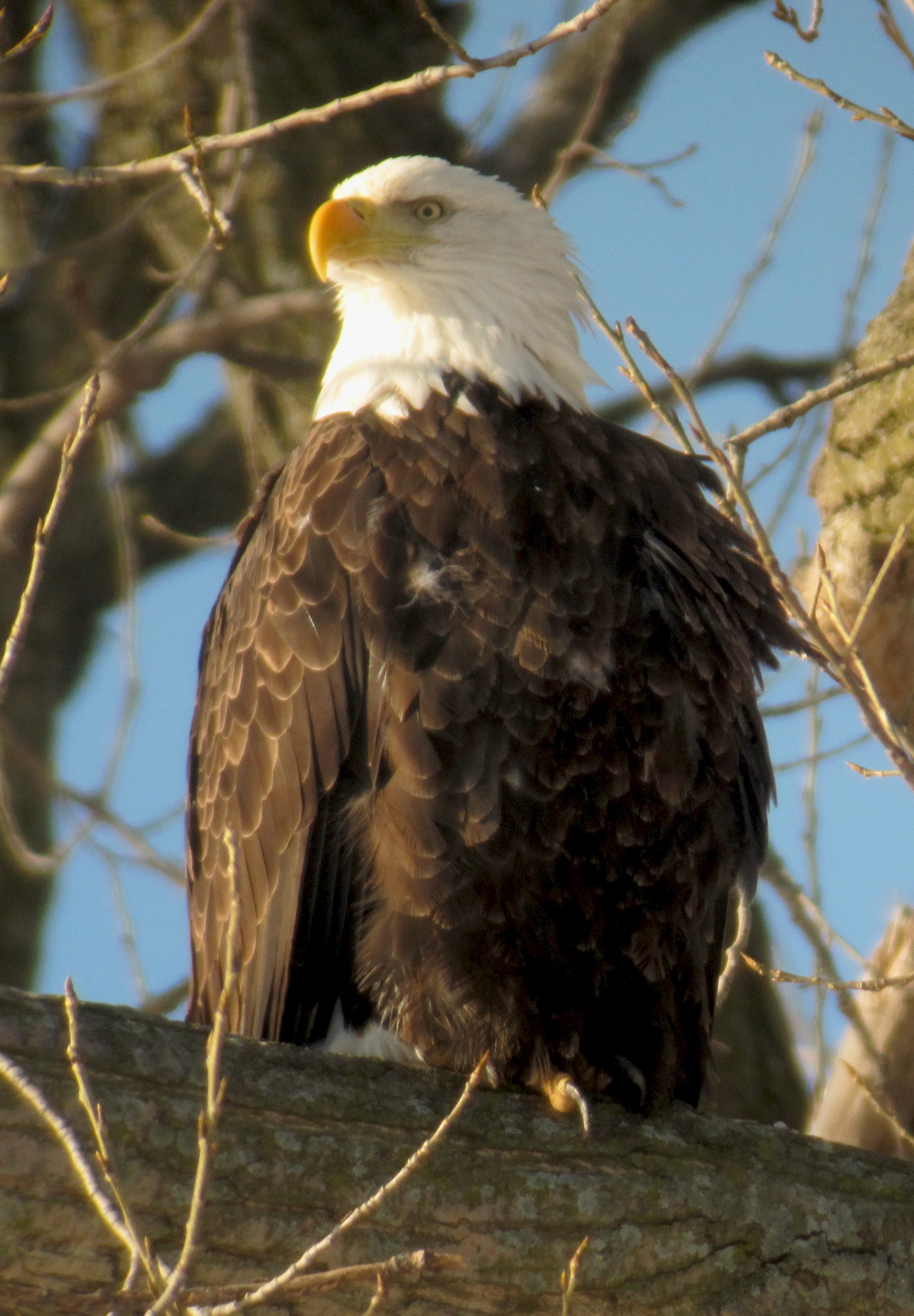
American Bald Eagle

America's symbol seems to be looking for direction

It has become evident that the race for the Republican nominee for President of the United States is completely different from any campaign in history.

Some Republicans have been scratching their heads wondering how the race produced four such disparate candidates. Candidates Mitt Romney, Rick Santorum, Newt Gingrich and Ron Paul appear to have very little in common with each other. And you would think that would not be the case with a political party where doctrinal lockstep has been the hallmark of the ruling class for so many years.

You can analyze the cause of the shakeup all you want. The Tea Party. The collapse of the Bush presidency. On and on goes the analysis as to why Republicans are fighting among themselves. But there’s really a simple reason why Republicans have four such strange candidates to choose from: Sooner or later, it had to be this way.

The Republican platform in the last 30 years has relied on four doctrinal pillars that have had to work together to deliver Republican candidates to power. And for a long time, it worked. But now those four doctrines are set apart in stark outline.

Fiscal conservatives are the branch of the party that focuses on monetary policy and prefers to let economic markets determine distribution of wealth. “Less regulation” is their call to action.

Political conservatives contend that the freedoms of democracy (especially as originally outlined in the Constitution) are sufficient to provide opportunity for every citizen to succeed. “Less government” is their mantra.

Social conservatives promote the value of traditional institutions and cultural laws as a foundation for government and society. “Less liberalism” is their war cry.

Religious conservatives bring God, faith and moral values to the cultural and political table. Hewing most closely to fundamentalist approach to the scriptures, their political action plan is “Less God means a weaker country.”

So, do you know which candidates fall into which conservative category by now?

Romney is the most obvious. His background as a venture capitalist is how he became fabulously wealthy. And his statement on the campaign trail that “corporations are people, my friend,” illustrates his worldview. Definitely playing the role of the fiscal conservative.

Next up is political conservative Ron Paul, who would prefer that government be shrunk down to almost nothing. The man with the Libertarian bent occupies a political conservative space so far to the right no one dares to reach out and touch him, for fear of being sucked into an invisible vortex.

Newt Gingrich should be functioning as a political conservative. As the key proponent of the Contract For America in the 1990s he led the Republican charge to distill politics down to a laundry list. With its politically fundamentalist bent, that tactic appealed to political conservatives at the time. But as Gingrich succumbed to his own hubris and drew breach of ethics charges that seemed to have destroyed his reputation as a political conservative, he was forced to abandon that strategy for a political future and came back through a different channel, and he chose that of a social conservative. But first Gingrich had some baggage to unload, so he conveniently joined the Catholic Church, that portal of confessional virtue, and briefly surged as a frontrunner leading up to the Florida primary where social conservatism is so highly valued. But playing the social conservative has been a strange and difficult role for Gingrich, and he has ultimately failed, in part because he walks sideways and talks out of the corner of his mouth about everything, at least figuratively. In  other words, he ultimately wasn’t believable as a straight-talking social conservative. But it was the only card he had to play.

That’s because Rick Santorum had locked up the position of religious conservative well before the campaign even began. Santorum’s views on virtually every subject are so heavily tinged with a conservative brand of Catholicism that many Republican voters early in the race shied away from such a marginal candidate. His recent rise in popularity is a sign of conservative desperation. The label “authentic” is being applied with some pride to Santorum, but what they really mean is “suitably extreme,” and we’ll get to what that means in a minute.

Because you see the electoral process for Republicans worked like a centrifuge this time around. The tightly spinning centrifuge of debates, caucuses and media exposure have slung the substance of Republicanism hard against the walls of the conservatism. And this time around the ideology produced four completely separate candidates, each of them pushed to the extreme limits of the ideology as a means to look convincingly clear about their respective subjects. In fact it has been the extreme failure of Republican policies under Bush that put so much centrifugal force to play upon conservatives in general. Economic policy: Costly Fail. Political and foreign policy: Damaging fail. Social and education policy: F+. Religious policy: Just plain creepy and hypocritical. Republicans tried everything they believed would work in America and got four “F’s” for the effort. So the pressure was on, especially now that President Barack Obama’s policy’s have actually had time to correct some of the mistakes made by conservative legislators the last decade. Obama rescued the automotive industry. Slowly stimulated the economy and didn’t overheat it. Provided intelligent support in foreign policy and military action that led to the death of Osama bin Laden and the fall of several dictators. These actions have got Republican heads spinning. And now the economy is bouncing back as well.

All this centrifugal force has left the formerly unified party to wonder aloud, “What happened?”

The fact is, reality happened. Conservatism as a social movement is, after all, a deeply hypocritical and confused mess. In fact, if you look close enough, it is possible to argue that the ideal we know as conservatism does functionally exist at all.

We’ve seen the effects of literalistic capitalism in America. The less we regulate the more things blow up in our faces. Like a bad chemistry experiment gone awry, the economy definitely needs a set of processes and ground rules and regulation performs that function. So conservatism likes to talk ideologically about the power of the free market to govern itself, but that is an exceptionally Darwinist notion that is not at all acceptable for civil society.

The claim of political conservatives that “less government is always better” is hypocritical by definition. If you don’t believe in the power of government to do good, why run for office?

Social conservatives simply fail to account for the fact that the world is not only changing all the time, but it has to change. Even if something was good in the past, the environment in which it functions is altering daily through technology, science, social progress and globalization. But if social conservatives had their way we would still have slavery, women would not have the right to vote and Jim Crow laws would still exist. Prohibition would still be in force. The list goes on and on. Anachronism is not a force for social good.

The archest forms of religious conservatives want to impose theocracy on America, and the Constitution defies that. Plus the belief system of fundamentalist Christians ignores and distorts the true meaning of the bible in ways that are simply irreconcilable to the natural laws and science upon which modern society depends.

Jam all four of these dysfunctional worldviews together and you have a real mess on your hands. And that’s what we got under 8 years of the Bush II presidency. A near total collapse of our economy, the 9/11 tragedy, illegal wars, torture and flaunting of Constitutional laws like never before, and Bush claimed his actions were the will of God somehow.

The dysfunctions of conservatism as a conglomerate doctrine complicate matters by trying to reconcile ideologies that stand for different truths. These are meant to balance each other out, but instead conservatism tries to pretend the differences don’t exist.

For example, if one truly believes in the literalistic version of market capitalism, then sharing your wealth as Jesus recommends in the bible is a ridiculous and socialistic notion. But in fact the Bible shows Jesus frequently requiring the wealthy give away their riches if they hope to gain entrance into heaven. Recall the parable of the camel going through the eye of the needle?

So based on dichotomies such as these, it was inevitable that the conservative wad of ideology would someday blow apart. We should be surprised it didn’t happen sooner. But people desperate for political power will cling together under the most egregious of banners, and conservatism has served that purpose for many people too many years.

Now we have Romney, Paul, Gingrich and Santorum standing before us like they don’t even want to be in the same room together. They argue and claw at each other furiously, proving forever that the four pillars of conservatism really have little to do with each other. Not if you look closely enough, and we’re getting that chance now. Real Republicans, the kind that understand the art and benefit of political compromise, want to puke. But one of these candidates will either get the nomination or the Republicans will arrive at an ugly conclusion too late and throw the whole lot out in favor of a brokered nominee. We can only hope it is not Jeb Bush.

But it’s quite obvious the Republicans prefer a messy wad of a candidate to the clearly defined truths that divide their party. Republicans have been so busy dismissing the various faults of their highly flawed candidates… even the strident bellows of Limbaugh, Hannity, O’Reilly and Fox News are almost squeezed out with the effort. But like always, they’ll find a way to justify whatever they believe is good for the country, even if it’s not. Based on what we can learn from this year’s electoral race, it is still power that matters to Republicans and conservatives in the end, not principles.

It all seems like art imitating life. The Burt Reynolds character in the original football flick “The Longest Yard” once said, “I’ve had my shit together a long time. It just doesn’t fit in one bucket.”

Truer words could not be said of this year’s Republican nomination race.