The miracle of convergent evolution and faith

convergence4There’s an interesting thing that happens in evolution called “convergence.” That is, through selective forces such as habitat or climate or competitive adaptation, different kinds of animals and plants can appear to look alike. One of the most familiar examples is the convergent evolution of functional wings in birds, bats and insects.

Playful evolution

It’s an interesting fact that evolution sometimes also works in “reverse” when it comes to evolved physical characteristics such as wings. That’s why we find flightless species of penguins and cormorants. These birds no longer needed to fly to survive and their wings have evolved to be used for different purposes, or practically no purpose at all.

Flightless cormorants are birds whose wings have "devolved" through lack of need to fly.

Flightless cormorants are birds whose wings have “devolved” through lack of need to fly.

Why would any bird cease to fly? There seems to be so much value in the ability to fly away from potential predators or to fly in pursuit of potential prey. The answer (in part) is that when you live in an environment where swimming for prey and escape is the more efficient manner of existence, then flying becomes an unnecessary use of energy.

By contrast, penguins use their wings to propel through water in pursuit of fish while flightless cormorants simply rely on their back feet to propel them through the water in pursuit of the fish they eat. And it works. So are penguins going “backwards” in terms of evolution? Not really. They’ve simply evolved in a different direction from other forms of flying or flightless birds.

Dumb choices? 

Penguins sometimes use their bellies to slide across the ice.

Penguins sometimes use their bellies to slide across the ice.

If you choose to think in anthropomorphic terms (projecting human characteristics on animals) you could criticize penguins for making poor evolutionary choices.“Look at you stupid penguins! Now you’re not like the rest of the birds! You made a dumb choice. Now you can no longer fly!”

There’s a problem with that line of thinking. The many species of penguins on this earth did not “choose” to become flightless. They became flightless in practical response to the environments where they live. Flying to capture food or escape predators was no longer useful.

Evolution at work

txblindsalamandersm807cu

A Texas blind salamander

There is no end to the odd number of ways evolution** works on living creatures. We also have blind salamanders that live in caves. They no longer need their eyesight to find food in an environment where there is no light. We also have mammals known as bats that have poor eyesight, yet navigate through the night sky using echolocation to avoid trees and zero in on flying insect prey.

Nature is thus a highly creative source of evolutionary invention. This includes convergence, where different types of animals or plants evolve the same characteristics such as limbs or wings or eyes. There is also divergence, where through genetic variation or interbreeding changes in physical structure become part of the selective forces at work in the survival of a species.

About sex

Of course evolution also works with physical and behavioral characteristics in seemingly confusing ways. In the animal and plant world it is quite common for all sorts of living species to have both male and female sexual characteristics. In such cases we use the general scientific term of  hermaphrodite to describe these multisexual life forms.

In nature hermaphroditic animals and plants are known to assume both sexual roles in the mating process. Some types of living things begin as a male and change into a female. Others work female into male within a single lifespan depending on their lifecycle. Still others are bidirectional in nature, switching sexual roles from one gender to another and back again.

There’s a difference, but it’s natural and normal

Among human beings the term used to describe people with both sexual identities or physical characteristics is intersex or transgender to describe people with both male and female body parts. 

Again, these are not people who have chosen to be both male and female, nor are they. Yet transgender people are often forced by culture and society to make choices people should never have to make. Society seems to demand that they choose one sex or the other or be forced to live in a dichotomous world where they are not accepted by either sex.

The same holds true for homosexual people as well. While the sexual characteristics of a homosexual person are not necessarily demonstrated in a physical sense, the sexual orientation of a homosexual person who is sexually attracted to those of the same sex is just as biologically expressive as being transgender.

Fears and actions

Of course these differences in human sexual characteristics and orientation have long been ostracized by societies that fear differences of any sort. In fact many societies fear even the common sexual expressions in women and men. Basic functions such as menstruation were once considered “unclean” by ancient cultures. This prejudice and fear against menstruating women was codified in the Bible with calls to isolate women from society for a period of days until they were judged to be “clean” again. The same rules applied for men who ejected semen onto their clothes.

Even in today’s society, sexual repression and control over a women’s body is carried out in ancient tribal traditions that mutilate the clitoris of young women to deny them sexual pleasure in intercourse. This brand of controlling behavior is the sign of a culture that has not evolved in its comprehension and understanding of individual equality and gender roles in society.

Canonized fears

Even supposedly advanced cultures embrace ancient taboos because they mask a brand of machismo based on ignorance and fear about the female gender. These male fears are canonized in the Genesis creation story where Eve tricks Adam into trying fruit from the “tree of knowledge.” Notice the interesting theme at work in that creation tradition? Right away it is knowledge that is the enemy. Remain ignorant and you’ll be safe from all temptation, says Genesis.
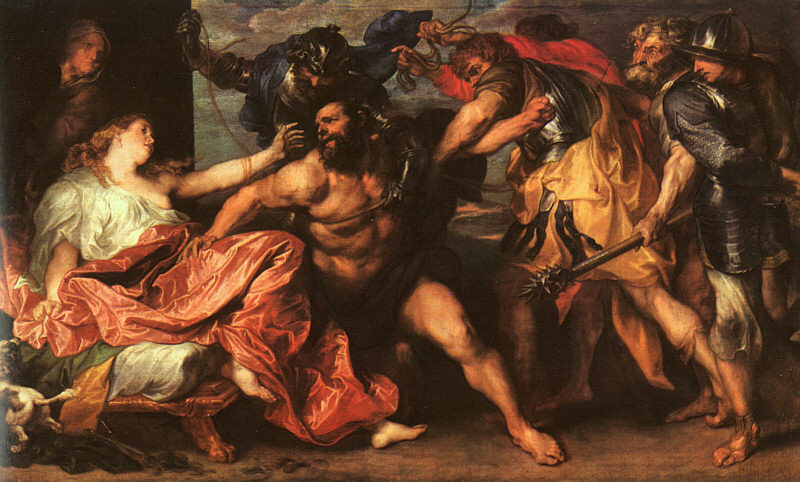
Samson and Delilah

Samson and Delilah

It carries through many other biblical stories as well. When Delilah secretly cuts the hair of Samson he loses his legendary strength. The power of such stories holds true to this day, as evidenced by this question and answer posted on Yahoo! Answers.

Q: Do you lose strength when you cut your hair?

A: Wow, are we bored today? No, you cannot lose your strength if/when you cut your hair. Samson was a biblical fable used to demonstrate that when you forget your faith, and rely on the wrong thing, you can and will lose everything you have. (Not that I’m really Christian or anything, just completing the train of thought, *grin*)

Of course the real meaning of the story focused on being dedicated to God in faith. Yet how interesting it is that this notion persists that a man could lose strength by having his hair cut.

There are many such perceptions that masculine traits are evidence of strength and personal valor. When people don’t follow these “norms” they immediately come into question by society. These prejudices against men who act feminine or engage other men in a homosexual relationship are also canonized in the Bible.

It is interesting to note that while the Bible calls homosexuality a sin in some cases, it is just as often used as a warning of symbol for fears about falling into other types of sins. Here is one such example:

Romans 1:26-32, “For this cause God gave them up unto vile affections: for even their women did change the natural use into that which is against nature: And likewise also the men, leaving the natural use of the woman, burned in their lust one toward another; men with men working that which is unseemly, and receiving in themselves that recompence of their error which was meet.

And even as they did not like to retain God in their knowledge, God gave them over to a reprobate mind, to do those things which are not convenient; Being filled with all unrighteousness, fornication, wickedness, covetousness, maliciousness; full of envy, murder, debate, deceit, malignity; whisperers, Backbiters, haters of God, despiteful, proud, boasters, inventors of evil things, disobedient to parents, Without understanding, covenantbreakers, without natural affection, implacable, unmerciful: Who knowing the judgment of God, that they which commit such things are worthy of death, not only do the same, but have pleasure in them that do them.”

wipe_out_homophobia_by_wipeout_homophobia-d4835i7This passage foremost condemns anything other than the “natural use of a woman,” which is rather a patriarchal manner in which to view women as a rule. And the fact of “men with men working that which is unseemly” actually reveals the entire lack of knowledge that in most of nature, such clear lines of demarcation and behavior do not always exist. Absent the knowledge of modern science, the Bible falls into a definition of “normalcy” that depends far too much on fear and not enough on understanding.

And for homosexuality to stand at the start of it all seems like a certain condemnation. But the real message of this passage is a condemnation of people acting out of control. That’s the real message of the Sodom and Gomorrah story in the Bible as well. When strangers wander into town, they take refuge with Lot. The townspeople call them out because town tradition states that strangers found after dark are fair sport for all sorts of abuse. God is disgusted not just with this tradition, but all sorts of abusive behavior in these towns. He blots them out for their transgressions, but homosexuality was not the sole cause for that wrath. Yet that story has been used to condemn homosexuals for “sodomy” based on a fear of sexual practices that do not supposedly fit the “normal” behavior of human beings.

Thought control

It’s all about thought control, plain and simple.

In 2015 this practice of imposing thought control based on ancient and ignorant prejudices is being called into question by none other than Pope Francis, head of the Catholic Church. He takes ancient bad habits to task by calling people to remember that Jesus himself came to turn the law over on its head. The Catholic News Service reports:

Jesus did “strange things,” like “walk with sinners, eat with tax collectors” — things the scholars of the law “did not like; doctrine was in danger, that doctrine of the law” that they and the “theologians had created over the centuries,” he said, according to Vatican Radio.

The scholars were safeguarding the law “out of love, to be faithful to God,” the pope said, but “they were closed up right there,” and forgot all the ways God has acted in history.

“They forgot that God is the God of the law, but is also the God of surprises,” he said.

“God is always new; he never denies himself, he never says that what he had said is wrong, but he always surprises us,” the pope said.

20130911cnsbr1564-1024x730But the Pope doesn’t stop there. He dispenses with ancient prejudices by taking his line of thought to conclusion in this way, as the CNS reports:

The scholars of the law also forgot that the people of God are a people on a journey, “and when you journey, you always find new things, things you never knew before,” he said. But the journey, like the law, is not an end in itself; they are a path, “a pedagogy,” toward “the ultimate manifestation of the Lord. Life is a journey toward the fullness of Jesus Christ, when he will come again.”

The law teaches the way to Christ, and “if the law does not lead to Jesus Christ,” he said, “and if it doesn’t get us closer to Jesus Christ, it is dead.”

Pope Francis is forced by tradition to make these statements as part of a transitional focus on change. The church cannot just flip its doctrine lest it come off as too flip for its position as an authority on faith. Yet the message is clear: We must dispense with ancient prejudices or find ourselves set apart from God and Christ.

And this is the convergent evolution between the church and the life of Christ. It has taken 2015 years for the church to come around to this understanding. In between there have been persecutions of millions of people based on ancient prejudices against Jews and Muslims despite Christ’s call to love our supposed enemies. There has been canonized and politicized prejudice exercised against homosexuals, lesbians and transgender people despite the fact that all these characteristics and orientations are manifested wholly in God’s own creations. It continues to this day. 

thYet perhaps we are finally evolving as a faith. The church can only find use of its true wings if it is allowed to embrace all the many forms of human beings. That is, we are homo sapiens.

The word “homo” means man. The word sapiens is based on the root Latin word “sapere” that means wise. Perhaps now the scientific term describing human beings––home sapiens––is at last converging on something approaching the truth. Sometimes it takes a long time for evolution to work in this world. 

* unprincipled (often used as a humorous or affectionate reproach)

**For a long time questions by those who doubt the theory of evolution focused on the idea there were no transitional forms in the fossil record to demonstrate links between ancient dinosaurs and modern creatures.

In the world of birds we have long had the skeletal imprint of the archaeopteryx, an apparently transitional form of dinosaur with feathers. Thanks to recent fossil discoveries from China we how have dozens more examples of feathered dinosaurs. These extinct life forms demonstrate structural progressions from feathered dinosaurs to modern birds. Some of these fossils exhibit such clear detail that scientists are even able to discern and analyze structures such as cones in the retinas that tell us these creatures could perceive color. These similarities demonstrate clear structural and functional relationships and serve as clear evidence of evolution at work throughout history. .

The false allegory in The Cross in the Shadow of the Crescent

By Christopher Cudworth

For Christmas this year a dear and close friend offered me a gift of The Cross in the Shadow of the Crescent by Erwin W. Lutzer with Steve Miller.

This friend of mine has been to Israel several times. She has converted to Judaism and back again to Christianity. She has searched her soul deeply and trusted God to make some of her most difficult life decisions for her.

Our relationship has included many theological discussions during more than 30 years of association. I know her heart and she knows mine. So I not take her gift of this book to me seriously.

So sat down to read it and this is how the book begins, with a chapter titled “The Day the Levees Broke.”

“The problem was not Katrina. 

The problem was that the levees broke. And, as a result, millions of tons of water inundated the City of New Orleans. When it was over, the city was practically destroyed and nearly 1000 people had died. If only the levees had been strong enough to hold back the water, New Orleans might have been able to survive the catastrophe.”

Perhaps to those unfamiliar with the history of resource abuse and strained attempts by the Army Corps of Engineers to provide safety for the City of New Orleans, those opening statements might seem sensible enough. Surely if the levees were strong enough, the logic goes, the water would not have gotten through.” 

katrina_maxsurgeBut here’s the rub. The strength of the levees was not the problem. The problem was instead manifold. For one thing, the storm surge caused by Katrina was the largest ever created by a tropical storm in the United States. A post on the site Weather Underground describes it this way.

Hurricane Katrina of 2005 produced the highest storm surge ever recorded on the U.S. coast–an astonishing 27.8 feet at Pass Christian, Mississippi. This bested the previous U.S. record of 22.8 feet, which also occurred at Pass Christian, during 1969’s Hurricane Camille. According to the NHC Katrina final report (PDF File), Hurricane Katrina brought a surge of 24 – 28 feet to a 20-mile stretch of Mississippi coast. Fully 90 miles of coast from eastern Louisiana to Alabama received a storm surge characteristic of a Category 3 hurricane. The colossal damage that resulted has been documented by blogger Margie Kieper during a series of blog posts that ran in the summer of 2006. The contents are reproduced here, and consist of an introduction explaining why the surge was so large, and 16 parts exploring the damage done to each stretch of the Gulf Coast ravaged by Hurricane Katrina in 2005.

surge_smallSo it wasn’t the levees breaking that produced the flooding in New Orleans. It was the height of the storm surge from Katrina, which at some points was 18 feet higher than the tallest levee. A levee cannot stop water that overtops it that way.

Manmade problems

There were some cogent factors as to why the storm surge stayed so high once it reached shore. Over the past 70 years human engineering of the coastline has resulted in a drastic reduction of coastal wetland habitat and marshes that once served as a buffer for the region against coastal weather activity. Normally a large expanse of wetlands can absorb much of the energy of a storm surge and slow it down. That reduces the height of the water. No amount of levee building can replace these natural coastal systems. So again, it was not that the levees were not strong enough. It is the fact that human activity has undermined the natural balance of the coastal ecosystem.

The strength of the Katrina storm system might also be a product of human impact on the environment. For years climatologists have predicted a potential rise in the number of tropical storms and also a rise in their intensity. This would be a projected effect of global climate change and warming of the oceans. The heat exchange in warmer waters helps tropical storms intensify. The result can be larger storms and higher winds. That combination can produce higher storm surges.

Shallow assumptions = shallow conclusions

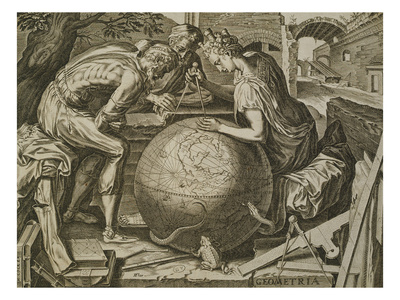
flemish-school-allegory-of-geometry-engraving-by-f-floris-16th-centurySo the assumptions Erwin W. Lutzer makes in beginning his book about worldviews and religious philosophy exhibit a shallowness in ideological framework. That is, he ignores too much reality in his opening allegory to have credence on the subjects he is about to address in his book. The flawed allegory demonstrates a brand of ideological thinking that ignores facts in favor of favored fictions.

This is a problem too seldom addressed in theological discussions. We all know that fundamental religious worldviews love to ignore science in favor of crediting everything on earth to the creative or destructive power of God. By using the paradigm of Katrina and blaming the flooding of New Orleans on the manmade levees, Mr. Lutzer exhibits the habitual credulity of so many conservative Christian thinkers. By focusing so strongly on the tenets of what he wants the levees to symbolize about the modern church and its so-called battle against the surge of Islamic foes in the world, he loses the ideological battle from the start.

Concerns for the church

It is bitterly ironic that Lutzer immediately goes on to complain that the Christian church is shrinking in America. “The church in the West has already felt the first stirrings of a storm directed against it, and without question the speed of the wind and the height of the waves will intensify as time moves on. The question is whether the church will have the strength and the courage to withstand the growing onslaught. The question is whether the levees will hold.”

Well Erwin, we’re glad you got your fears out there on the table. But your allegory does actually reveals the real problem with the shallowness of modern day fundamental Christianity.

A levee against a tidal wave of reason?

0708-06HanapepeLeveeHave you ever considered the real reasons why the church is weakening in America? Because the Moody Bible Institute (and Moody Radio) from which your views so proudly emanate is prone to promoting a version of Christianity that is both rigid and brittle. The inflexibly fundamental version of faith promoted by the Moody Bible Institute with its support for creationism as science and its intolerance of homosexuality and the Constitutional right to abortion in America are anachronistic at best and a warped and dismissive interpretation of scripture at its worst.

Modern day Pharisees and the Pope who calls them out

20130911cnsbr1564-1024x730Perhaps if conservative Christianity comes out of its doctrinal hole as Jesus warned the Pharisees to do during in his time on earth, then perhaps the faith would have an opportunity to actually breathe some spirit into society. At least Pope Francis of the Catholic Church seems to get this concept. His advocacy on behalf of science and social integration is thought leadership much overdue in this world.

Pope Francis nails the Moody Bible Institute to the wall with his statement that “laws that don’t lead to Jesus are obsolete.” And you can already hear the conservative instincts kicking in when modern day Pharisees hear such statements. “Well, you can’t lead a homosexual to Jesus if they won’t give up their lifestyle…” and such statements are right where the Moody-heads aim their sites when challenged to change their doctrine.

A tough read

And so it will be difficult indeed for me to read Erwin W. Lutzer’s book The Cross in the Shadow of the Crescent. if the introduction is any indication, its philosophy surely lurks beneath a cloud of fear and ostracism. These two methodologies seem to be held dear by conservative faith.

This is one Christian who prefers to breathe the clean air of progressive thought. Where science can be reconciled to faith. Where intolerance is not the first rule of order in the church. And where the bigger picture and natural events in this world are not consigned to doctrinal symbolism designed to scare believers into that weird zone of religious contrition and holy war.

The Genesis Fix.

The Genesis Fix.

Dick Cheney’s confession about what really tortures him

141208_fallon_cheneylies_apBack in October 2012 when cyclist Lance Armstrong was dominating headlines in the sport world as the truth came out about his doping allegations, he unwittingly revealed his with a confession of sorts well in advance of the famous Oprah Winfrey interview where he technically admitted his guilt in using all kinds of performance enhancing drugs and techniques. This is what he said and what I wrote about it then:

“I know who won those seven Tours, my teammates know who won those seven Tours, and everyone I competed against knows who won those seven Tours. We all raced together. For three weeks over the same roads, the same mountains, and against all the weather and elements that we had to confront. There were no shortcuts, there was no special treatment. The same courses, the same rules. The toughest event in the world where the strongest man wins. Nobody can ever change that.”

Admirable in its forceful defense of his victories, Armstrong’s statement still stops short of saying he was truly innocent of doping. And that, in the context of all the evidence now emerging in full context of teammates confessing and accepting bans and possible other punishments for their sins, amounts to a confession by Armstrong as well.

I was reminded of Armstrong’s between-the-lines confession while listening to yet another forceful personality in the news. Dick Cheney recently appeared on Meet the Press and was interviewed by Chuck Todd. Cheney has repeatedly denied that he presided over a policy of using torture to extract information from detainees. So Todd asked him exactly how Cheney would define torture. This is what he said…

“Well torture to me, Chuck, is uh, an American citizen, um, on his cell phone making a last call to his four young daughters shortly before he burns to death in the upper levels of the trade center in New York City on 9/11.”

Follow the pattern of that statement and you actually find that the most tortuous aspect of everything that happened leading up to and following the 9/11 tragedy is what tortures Dick Cheney. His statement is nothing less than an admission of guilt that he is tortured by the thought of all those people dying under his watch. And by implication that means he is guilty about not having read the clear signs that something bad was about to happen. Not even the clear intelligence and directives of his immediate advisors on terrorism including including Richard Clarke, former counterterrorism chief could get the attention of a Bush and Cheney White House focused on their own agenda for invasions of Iraq and a takeover in the Middle East.

Cheney denies all such warnings ever happened. But we are forced to consider whether that is true or whether he simply refused to hear them. From a man who refuses to acknowledge that waterboarding and beating and freezing people to death is torture, his level of honesty and clarity must be called into question.

It’s clear in his definition of torture that Dick Cheney feels enormous guilt for his own selfishly shortsighted behavior and what it caused the nation to experience.  Well torture to me, Chuck, is uh, an American citizen…”

He’ll never straight out admit it. That is not Dick Cheney’s style. But he will likely go to the grave with a cloak of bravado covering his angst and guilt. That’s how dark heroes tend to go down.

How a hummingbird explains creation

Anna's Hummingbird.

Anna’s Hummingbird file photo.

On a Facebook site called Hummingbirds Anonymous a member recently posted a striking photo of an adult Anna’s Hummingbird. The photo captures the iridescent facial feathers and the cascade of the gorget, the bib of brightly colored feathers right below the beak.

Inspired by the photo, the person who posted it made the comment “All Things Bright and Beautiful! The Lord God Made Them All.”

What a setup.

Backwards and forwards

What so many people fail to appreciate is that hummingbirds are part of a continuum of bird species in this world. They have morphological relationships to other birds. That is, they share vital characteristics with other species. Pick up any bird identification guide and you’ll see that hummingbirds are placed between swifts and kingfishers, both of which are enormously capable fliers in their own way.

ChimneySwiftMichaelVeltriSwifts look much like hummingbirds. They are a lot less colorful. Some look like cigars with wings. Those wings bear much the same shape as hummingbirds, only swifts can’t fly backwards. They do fly forwards at immense speeds. Swifts are also known to fly all day long plucking insect food from the air. At night many of them converge over a cave or a chimney in swirling clouds, then swoop down to perch for the night with their tiny feet clutching the surface on which they sleep.

DSC_5945-1On the other bird bookend are kingfishers, which like hummingbirds can fly in one place by hovering. This ability lets them hang over the water while fishing. They often fly to a position over the water, hover for a few seconds eyeing their prey and plunge into the water.

Living large as tiny birds

Between these two kinds of birds lie the many species of colorful hummingbirds. In America these range in size from the diminutively proportioned Lucifer Hummingbird (3.5”) all the way up to the Magnificent Hummingbird (5”). There are nearly 20 species of hummingbirds found in the United States alone. Many more types and their close relatives live in the tropics.

If we ask some simple questions as to why there aren’t even more hummingbirds in the United States we find the answer is simple. Hummingbirds depend on a certain sort of environment to survive. This is a life and death proposition. Almost every winter here in Illinois we find a variety of hummingbird visiting our region from the southwest. A bird will get attached to a hummingbird feeder and never leave when the weather gets cold. They can survive fairly well because they go into a state of torpidity overnight when the temperature drops.

Sooner or later these wayward hummingbirds are either forced to leave or die somewhere in the cold. That’s because they are not naturally adapted to surviving in such cold conditions. Many species of hummingbirds prefer the desert where it’s hot all day and cool at night. That lets them feed aggressively and then sleep it off when it cools down overnight.

Defined existence

If there weren’t such needs hummingbirds could exist anywhere their whims might take then. And that’s how nature works. Sometimes birds and other creatures launch off from their ideal environments for new environs. If enough of them go together and they manage to breed, a new population might form and their range expands.

But that’s the exception rather than the rule. It’s hard enough sometimes for hummingbirds to even accomplish what they need to survive. Many species launch off in flight from the Yucatan Peninsula in Mexico and travel several hundred miles to Texas across the Gulf of Mexico. If the winds stay favorable they make it. If they don’t an entire flock can grow exhausted and perish in the water.

Tiny losses add up to big effects

One might be tempted to ask a classically moral question about such an event. How could God allow such beautiful, tiny creatures to die in such an ignominious, useless way?

IMG_0130Well, we’ve seen that hummingbirds have special adaptations that allow them to survive. We’ve seen that they fill a continuum in the types of birds we find in the world. We understand that hummingbirds also depend on certain environmental conditions to survive. They need the right food, and frequently. All these factors determine how and where hummingbirds are able to live. They also determine whether they live to breed again, or die as a species.

Millions of types of living things have come and gone on the planet earth. 99% of all living things that ever existed on planet earth are now extinct. They died off. God mourned none of them apparently.

Learning from mistakes

But we’ve studied those creatures and learned a few things about why animals do and don’t survive. We’ve also found extremely compelling evidence that the creatures that came before us and disappeared from the earth were connected both morphologically IMG_0169and genetically to the living things we find around us today. Like hummingbirds, all living things are part of a continuum. We can only see a slice of that continuum in the present, yet even that slice is massively vast and diverse. We also now know that many of the creatures we call dinosaurs bore feathers like modern day birds. We can see the patterns and shapes of those feathers in fossils. In fact birds may be nothing more than dinosaurs still alive in the present.

Missing links

Painting by Christopher Cudworth of Chicago skyline with peregrine falcon.

Painting by Christopher Cudworth of Chicago skyline with peregrine falcon.

So the reason God allows beautiful things like hummingbirds to die in the ocean in the process of creation is that they represent the ultimately missing links in the common purpose of the Creator. That is, to continue the creative process against all other forces, God allows living things to come and go. Even our notions of “good” and “evil” fall well within this continuum. We impose these values on the processes of nature to help us understand them, but those values do not by nature define the acts and results of natural causes. They merely reflect them and our judgment of them. 

As human beings we find ourselves immersed in this continuum. Even the Bible recognizes this fact, branding human beings as little more than “leaves of grass.” We are dust to dust. Part of a continuum. 

Message of hope

Yet the message of hope in the Bible is that we can find meaning in life by identifying with the purpose of the creator. Our contributions to human society and this world help define what we call the Kingdom of God. Amongst humans––and as defined by the emotional states of hate and love we conceive as sentient creatures––there is a moral code. 

That’s what God expects us to understand. A hummingbird is an expression of the creative force running through all things. Whatever we must do, and however we can conceive its complexity and seemingly miraculous features is our duty to understand its the best way we can. That is part of our best hope. 

Grace appreciated

In fact we may not fully appreciate the creative power of God if we do not also recognize the science that so clearly outlines an apparently chaotic universe governed by physical laws. In that model we can better comprehend the free will and grace of existence that comes with it. We are related to these living things all around us in creative and moral foundation. The methods by which these living things come to exist are wondrous. Science reveals these miracles in manifold ways.

Those who blame science for undermining God fail to grasp an important point. Through evidence in all of scripture, God seems to care far less about how we got where we are in life than what we do with this life we’ve been given. We might start by showing a little more respect for creation, lest it show that much respect toward us. Because that’s how it all works.

Salvation from a liberal perspective

By Christopher Cudworth

PaversThe Second Presbyterian church in downtown Lancaster, Pennsylvania was our family’s religious home from my elementary school years through middle school. Then we pulled up roots and moved to the tiny town of Elburn deep in the cornfields of Illinois. My parents landed at a Presbyterian church in Geneva, nine miles east.

I got confirmed with a group of fellow 8th graders at a congregational church run by the pastor who was our neighbor. Then our family moved once again and my church attendance dropped away with obligations in high school.

A brush with conservatism

But then a group of friends joined Campus Life, the evangelical youth ministry staffed mostly by students from nearby Wheaton College, one of the leading bastions of conservative education in the Upper Midwest.

Most of us did not recognize the conservative ideology behind Campus Life when it first arrived in our town. We attended with students from other high schools, which was pretty radical for the time. So it all felt new and exciting in its way.

As the program grew and its participants were encouraged to dig deeper into the theology behind the feelgood high school ministry, I began to ask questions about what we were being encouraged to learn. Some of these questions exasperated the head of the group, who pulled me aside with a warning and an admonition. “If you keep asking questions you’ll never be a Christian.”

I ignored his aggressive warning and finished out the year with the group. But something about the confrontation made me even more determined to ask questions about the Christian faith and its teachings.

New laws

In college I received a C grade in a New Testament course. I failed to grasp that in that particular situation the path to success was to recite what we were being taught, not to question its verity.

As a senior I fell in love with a girl with whom I watched the television program Jesus of Nazareth. It’s narrative was basically traditional, but the emotion was compelling. My curiosity about faith was kicked back into gear. My questions about some notable aspects of faith were answered. For the first time in life I recognized the liberal truth of Christ. He resisted the wrong kinds of authority. He fought back against people seeking to control religion through literal or legalistic means.

Watching that program taught me that Jesus also asked and welcomed a lot of questions. In fact he won many of his most famous arguments by asking questions in response to legalistic challenges. I’d found a hero of sorts.

Narnian virtues

The summer following my senior year in college I took turns reading all the books in the C.S. Lewis series The Chronicles of Narnia. Christian themes were evident in the metaphorically fantastic story of a band of children who travel to a different dimension where animals can talk and evil sorcery is resisted by the lion known as Aslan. Much like the parables of Jesus the Chronicles of Narnia use symbolism to convey spiritual principles. That opened my eyes even further to the fact that symbolism is one of the most powerful forces in all of scripture.

Marriage and beyond

I did not marry that girl from college but our mutual spiritual exploration did have a deep effect on my life. When I got married in 1985 my wife and I began worship at a Lutheran Church Missouri Synod congregation because that is the tradition in which she had been raised.

The pastor at the time was a wise former campus minister who once gave a sermon titled “Liberals, Bleeding Hearts and Do-Gooders” in which he boldly challenged the growing perception that the Bible was strictly a conservative document. His main point focused on the fact that Jesus himself was a do-gooder, a bleeding heart and yes, a liberal. Scandalous!

When that pastor retired the church brought in a fire and brimstone preacher from the St. Louis area. He wore a wickedly bad toupee and spent most Sundays railing about an angry God. But my wife and I hung in there even when the church itself became an angry place to be. This was a new and not delightful experience for both of us. We loved our fellow church members and continued our bible studies, church participation and teaching. Yet Sundays often left us sad and confused by the near hatred we kept hearing from the pulpit. We talked often of leaving. But we hung in there.

Facts and fictions

Through a succession of increasingly conservative pastors for another 12 years my wife and I served that church in many ways. She took a job in the preschool. I sang in numerous choirs and ultimately had the opportunity to sing and play guitar in Praise Band too.

Our children were confirmed at that church. But during the process they both admitted exasperation at the manner in which certain “biblical facts” were being taught. The pastor railed against evolution, for example. Both of them had learned plenty in school that taught them science was a reliable, well-founded worldview. Yet both kids dutifully recited what they were told to learn for confirmation and the pastor praised them as model students of the Lutheran faith.

As the church grew increasingly conservative, sermons attacked evolution as a godless belief and characterized homosexuality as a nearly unforgivable sin. After 25 years our family migrated up the river to an ELCA Lutheran Church with open communion and even women pastors. God Forbid.

Questions and devotions

All through this process of growing up and raising a family, the questions I had about faith did not keep me from a certain devotion to God. All the journals I kept about my running through high school, college and beyond express thankfulness to God for the opportunity to compete and sometimes win. I prayed for insight through both challenges and triumphs.

My 25 years of service to a Missouri Synod Lutheran church taught me there was no special insight gained from conservatism. As a board member several times over I saw how decisions were made, or not made, by people with ostensibly ironclad convictions. How desperately wrong they could be, and in so many ways.

That confirmed many of the suspicions I had about conservatism in the world at large. Starting with Ronald Reagan in the early 1980s, It struck that conservatism was far more concerned with ideology than justice. When Reagan installed James Watt as Secretary of the Interior, he openly proclaimed himself an adversary of the environmental movement on grounds of religious views. Reagan himself claimed to be a protector of moral values in America, yet the so-called Great Communicator branded ketchup a vegetable and played dishonest games through the Iran-Contra affair. The fact that people called Oliver North a hero for his illegal activities and seemed to worship his “above the law” convictions confirmed my worst suspicions about conservatism and its methodologies.

Chance encounter

Ten full years after I had participated in the high Campus Life program where that evangelical counselor confronted me for questioning conservative ideology, I encountered the same man at a McDonald’s in my hometown. At first he avoided looking at me, but when our eyes finally met I could see tears running down his face.

Immediately I went over and invited him to sit down with me. We talked and he confessed that he was upset about what he’d said to be a decade before. I told him: “There’s no reason to be upset. What you said to me did not discourage me from a personal faith. I still ask questions. But I still believe.”

Perhaps he was surprised. We parted on friendly terms and I thanked him for his service to Campus Life. It still strikes me that so many people find it hard to believe there is salvation from a liberal perspective. As noted, Jesus often answered questions by asking questions of his own. This was particularly true when he encountered people with conservative opinions trying to impose their convictions on him. Here’s one classic example from the Book of Matthew:

That Which Defiles

15 Then some Pharisees and teachers of the law came to Jesus from Jerusalem and asked, “Why do your disciples break the tradition of the elders? They don’t wash their hands before they eat!”

Jesus replied, “And why do you break the command of God for the sake of your tradition? For God said, ‘Honor your father and mother’[a] and ‘Anyone who curses their father or mother is to be put to death.’[b] But you say that if anyone declares that what might have been used to help their father or mother is ‘devoted to God,’ they are not to ‘honor their father or mother’ with it. Thus you nullify the word of God for the sake of your tradition. You hypocrites! Isaiah was right when he prophesied about you:

“‘These people honor me with their lips,
    but their hearts are far from me.
They worship me in vain;
    their teachings are merely human rules.’[c]

And that, in a nutshell, is why I’m now a liberal and will always be a liberal believer. That liberal pastor in the conservative Missouri Synod Lutheran Church was also right when he preached the Jesus was a “Liberal, Do-Gooder and Bleeding Heart.” Salvation from a liberal perspectives comes through the very act of questioning false authority, and standing up for the social justice deeply integrated in the liberal Christian faith. That’s how it’s always been, according to Jesus at least.

How biblical literalism affects politics, culture and the environment

Back in 2007 I predicted the outcome of the November 2014 election

FlagWaiverIt took me ten years to complete my book The Genesis Fix: A Repair Manual for Faith in the Modern Age. It started with an essay titled “How the Earth Was Forgotten In Creation” back in 1997. That essay dealt with the ugly ideological divide building between literalistic Christians and those who believe in science, evolution, environmentalism and earth stewardship.

But with the election of George W. Bush in 2000, and the obvious doctrinal politics linking religious and political absolutism behind the so-called “victory” that included equally obvious strong-arming of the political process, the book expanded in scope with every passing year.

Money talks

One of the emerging dynamics in the early days of the Bush administration was the corporatism in the entire approach to politics. Dick Cheney was so tied in with his Halliburton connections and war profiteering was clearly in place during the invasion and takeover of Iraq. Mercenaries were hired to fight the unbudgeted war. It was like pigs at the trough.

Then the Fox News phenomenon took hold through the Iraq War. The good people and conservatives I knew were sucked into that entire mentality. It was sad to see them grow in anger even when their party was in power, and entirely powerful. It was not enough to defeat their political foes and run all four branches of government. The language ramped up and turned into a culture war, one that resembles the divide between North and South during the Civil War. In other words, for all the changes, America has not really changed.

Except there was a new facet to the new corporal divide in America. Corporate money. So in writing my book I documented how and why this new component in American politics was going to define future choices of politicians. This is what I wrote:

The current-day battle between liberals and conservatives carries the same stridency and stubbornness that marked the American Civil War. The difficult question we must face is whether we can anticipate the rise of a new form of “confederacy” in the modern age.

The original, Southern Confederacy stemmed from dissatisfaction with the state of the Union and the future of government.  It might seem easy to assume that the Union was 100% on the right side of political issues in the Civil War. But no matter how correct the Union cause might appear in retrospect, the Confederacy was not by definition without virtue. As a political entity it may well have been justified in defending itself against economic and military aggression by the Union. And in spite of the notion that the ideology of the Confederacy was purged through the Civil War, the personal and political freedoms advocated by the South are alive and well today in modern society, woven into the politics of libertarians and other conservatives who contend that the best government is that which governs least. These principles the Confederacy sought to defend, and the sense of pride in defending moral principles has never been lost on the South.

However unfortunate it may have been for the Confederate South to secede, one can admire the determination of the movement as symbolic of the American revolutionary spirit. It may still be possible that partisan politics to produce an America divided over ideology, geography, oligarchy, or all of the above.

Perhaps the most likely scenario is the formation of a “neo-Confederacy” around “doctrinal states” or politics focused on “Red” and “Blue” states. Proponents on either side of the political fence have begun to see the value of the “winner-take-all” approach. We are not far from a moment in history when battles over doctrinal authority could lead to a new secession in the hands of the “neo-Confederates” and the states they represent. 

But there are other issues afoot as well. The next Civil War may be fought not in the fields and forests of America, but in courtrooms where armies of lawyers battle over the rights of corporations to control America’s life and politics. Corporate lobbies and revenue now influence every facet of American life.  The largest corporations and the individuals who run them have more money and power than many countries in the world.44 It is not a stretch to say that one cannot become a governor, senator or representative without the backing of corporations. A neo-Confederacy of corporate largess already exists in America, and it is not limited to the Republican side of the political fence.  It may not be long before the power vested in corporations becomes a self-fulfilling mandate and America will be forced to choose between its original model of a democratic republic recorded in the Constitution and a new, corporate society that is ruled by companies who run the business of America. Whether we have the courage to resist this takeover of American life is a question for our age.

And that is what has now come to pass. The November 2014 election confirms that the neo-Confederacy of corporate politics is officially, indeterminately in power. We’ll see if America has the will for another great Civil War.

The Genesis Fix.

The Genesis Fix.

From peaceful Muslims to murder of liberal heroes, Progressives have a right to be pissed

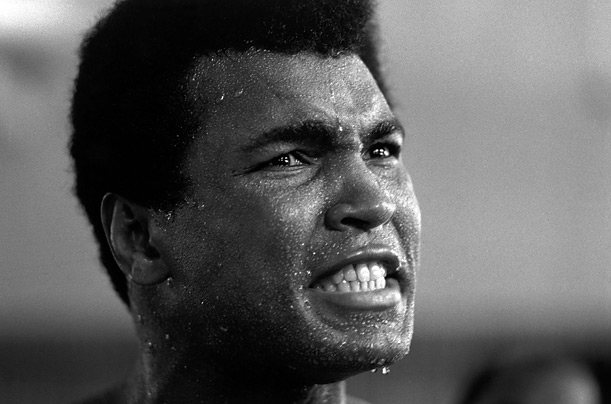
muhammad_ali_02aBack in the 1960s when Muhammad Ali converted to Islam, America hardly knew how to handle the religious convictions of a boxing hero gone faithful. Here was a famous pugilist choosing a religion that was not in line with America’s generally Christian leanings. And how could a fighter not want to fight for his country?

Then Ali (ne: Cassius Clay) did the unthinkable. He asked for conscientious objector status during the war in Vietnam. The United States initially indicted Ali on grounds that his beliefs were racially and politically motivated, not religious. Ultimately the case was overturned and Ali was granted freedom and the right to pursue his profession. Which ironically, was boxing.

Such is the complexity of liberal values, which do not always fall into black and white categories. But the lesson America has long neglected to recognize from Ali’s case is his defense of the Nation of Islam as a religion of peace. Ali stood as a religious Progressive, alone in many respects, trying to defend his right to religious freedom. He was willing to fight, of course. But not to kill.

Of course Ali earned little sympathy from the political right at the time. He was called a traitor against his country. Racial implications were rife as well, with a threatening undertone that implied that this black man should get back in line and do what his country (ne: master) wanted him to do.

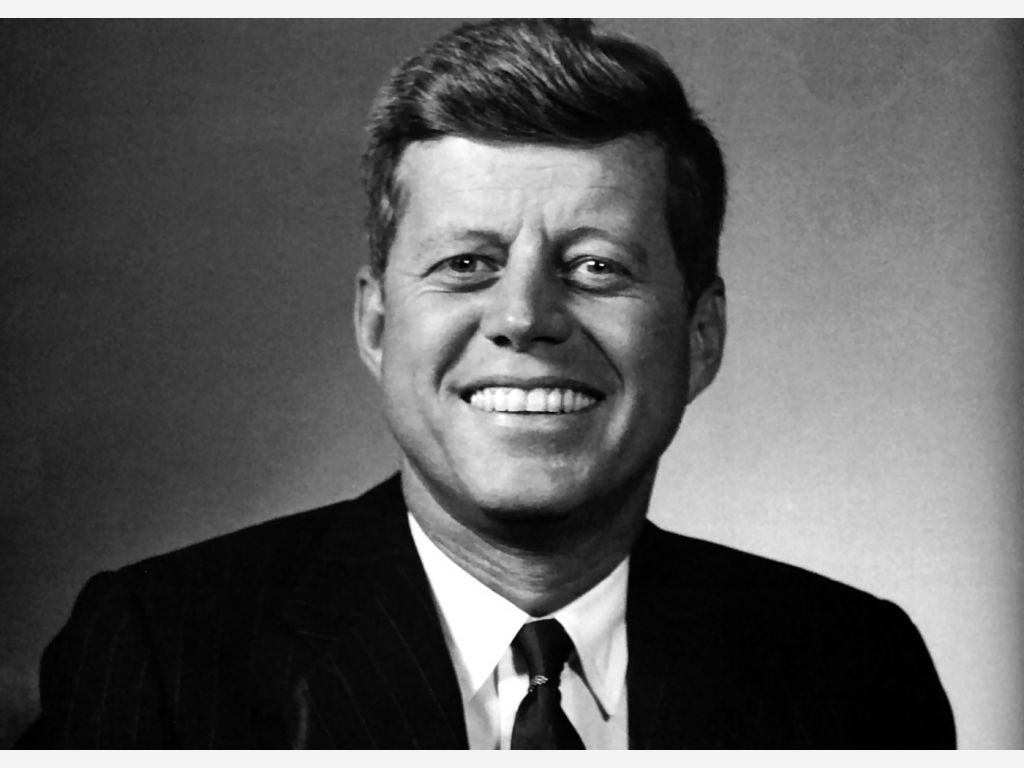
John_F_KennedyAli was perhaps lucky not to be assassinated for expressing his political views. Other liberal and Progressive leaders of that era did not survive their public challenges to the status quo. John F. Kennedy was assassinated, as was his brother Robert. Hatred of the two men by operatives in the CIA, the mob and political conservatives was well-known. Some even speculate the Lyndon Baines Johnson was politically jealous of the two men and conspired to have JFK assassinated. Recently released information from the Kennedy family intimates their own concerns about that potential.

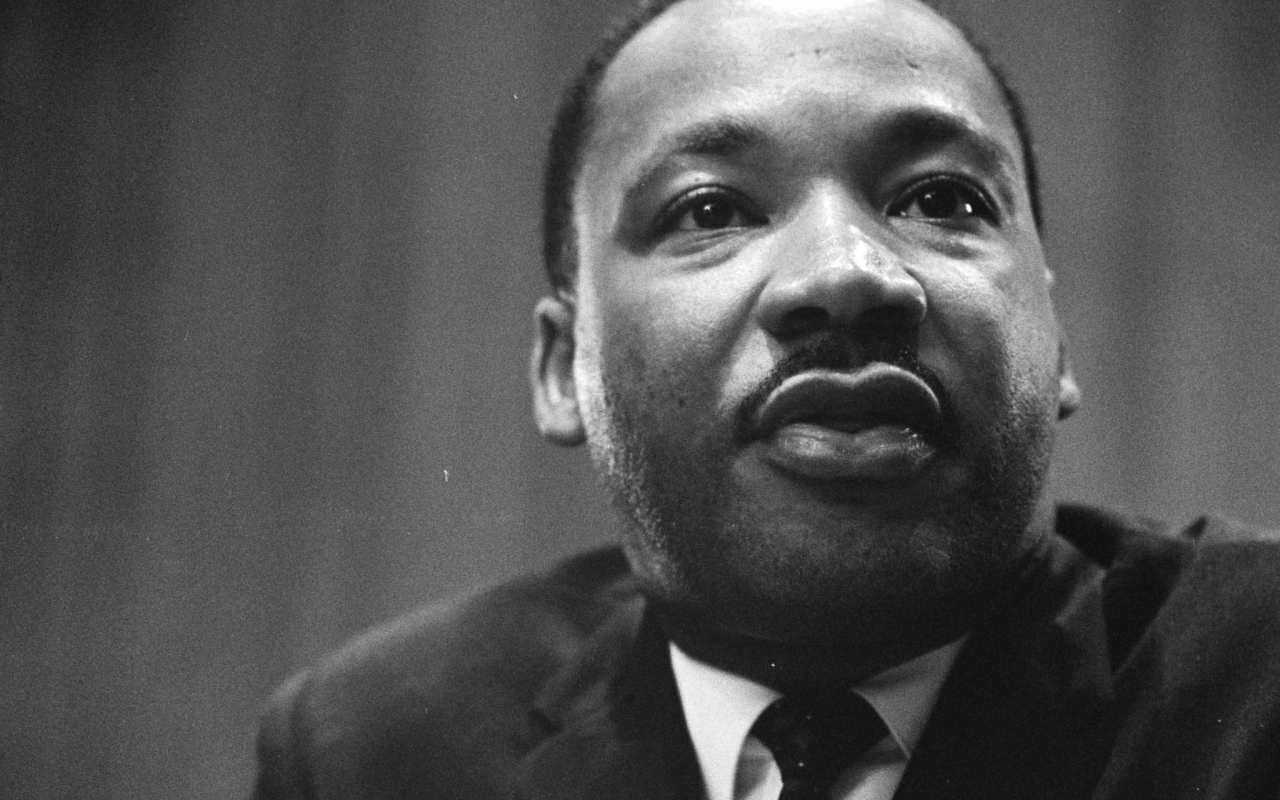
Martin-Luther-King-Jr-1280x800-3It wasn’t long after the Kennedy assassinations that Martin Luther King, Jr. was also shot dead. The 1960s were a great period of social revolution but a deadly, punitive time to be a Progressive leader. Reasoned voices were silenced. The nation’s direction and policies were waylaid.

That is not to say that liberals were stopped from helping minorities work toward civil rights. Liberals and Progressives fought on, hewing closely to the liberal foundations of the very Constitution upon which America was founded. That’s right, the Constitution is a liberal document in that it progressively outlines the equal rights of all its citizens regardless of race, gender or even sexual orientation.

But that liberal foundation has required considerable effort to defend and protect. The fight has been compounded by an aggressive attempt by religious conservatives to essentially undermine the liberal values that guarantee freedom from religion as well as freedom of religion. Conservatives have attempted massive revisionism by claiming that America’s founders were Christians, and that Christian “values” drive the republic.

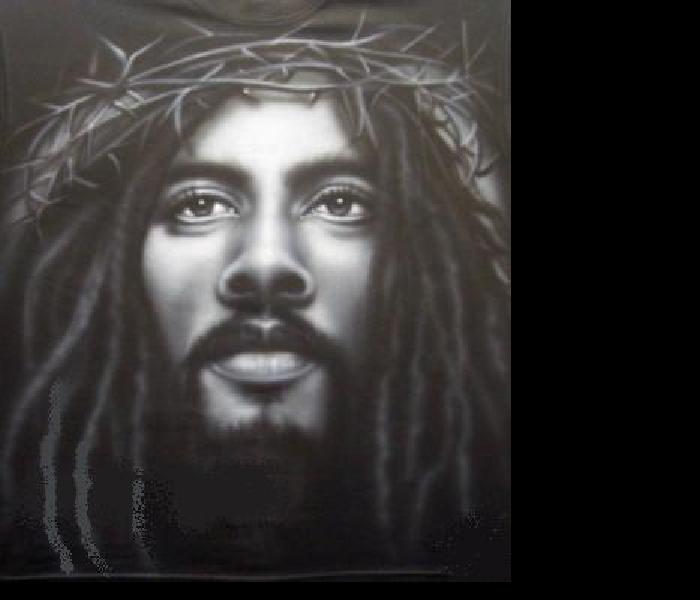
jesus-blackCertainly there are reflections of the Judeo-Christian tradition in America’s commitment to equality. But Christianity as a conservative religious movement has a long tradition of ignoring its equally liberal foundations. Jesus Christ was anything but a conservative. He fought the conservatives of his day in the form of Pharisees and other religious leaders determined to wield power through faith, and to manipulate others through economic and social pressures. Those conservatives in power at the time were the very forces that turned Jesus over to Roman authorities to have him crucified. So the battle between conservatives eager for power and control with the liberal agenda is a long and ancient conflict. It continues to this day.

It was not about the “jews” murdering Jesus. It was about conservatives without conscience, to quote one John Dean, who wrote a book of the same title. That book ought to be required reading for every American citizen.  It documents the power-mongering conservative movement that threatens to engulf and swallow the personal and individual rights of every person in America. All for the profit of the very few.

Conservatives have worked hard the past thirty years to blur the lines between corporate and individual rights. Indeed, the Citizens United case was specifically driven to the Supreme Court to allow more corporate money into the political process. During the 2012 presidential election, candidate Mitt Romney blurted the conservative political belief that, “Corporations are people…”

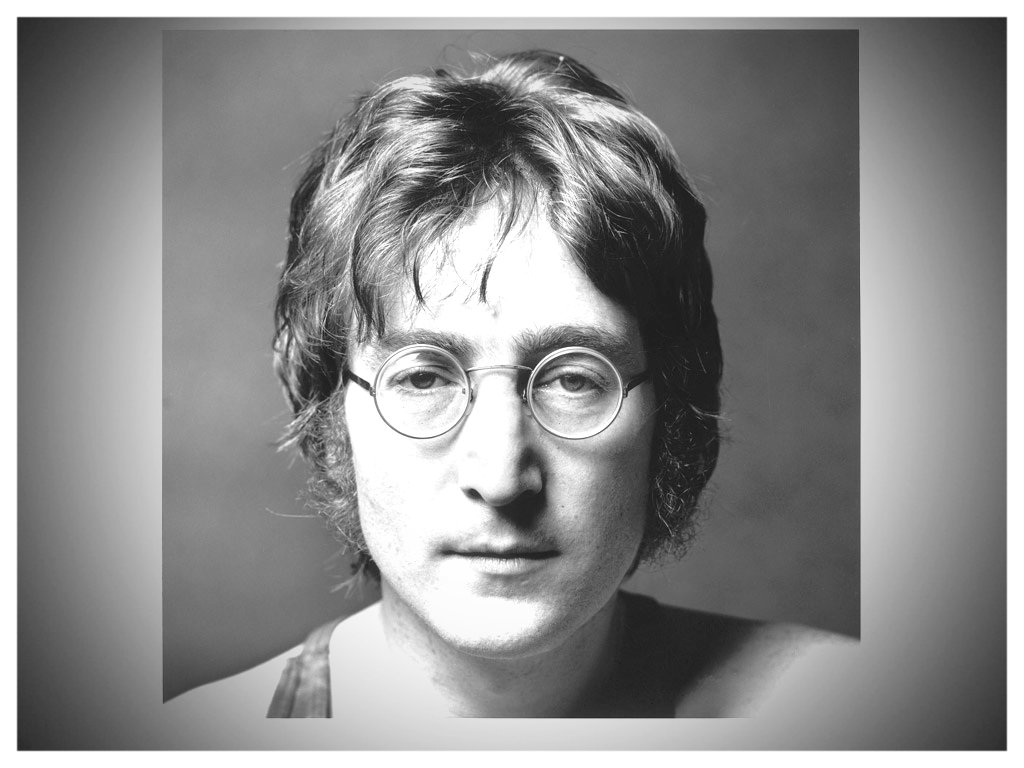
John-Lennon-john-lennon-34078983-1024-768But he’s wrong. And he’ll always be wrong about that. That very statement brings to mind the cogent statement of one John Lennon, former Beatle and outspoken critic of insane conservative political and religious motives. Lennon said: “Our society is run by insane people for insane objectives. I think we’re being run by maniacs for maniacal ends and I think I’m liable to be put away as insane for expressing that. That’s what’s insane about it.”

And what was the result for John Lennon in this world? An insane man shot him in the head on the streets of New York City.

Which brings to mind another insane statement relative to weapons like the one used to shoot John Lennon. Gun advocates love to say that “Guns don’t kill people. People kill people.” And so goes the insanity, and guns of military grade continue to proliferate in America, where children are shot to death in elementary schools, and gunman invade college campuses or stand up in movie theaters and open fire.

The rational, sane thing to do would be to pay attention to the real first phrase of the Second Amendment, which says “A well-regulated militia… being necessary for the security of a free state….”

And yes, the Second Amendment goes on to say that the right to keep and bear arms shall not be infringed. So protect that right, but also protect against guns getting into the hands of insane people. Set up standards that are hard to achieve because that is what is meant by the phrase “a well-regulated militia.” Because that is what is required for the security of a free state.

It works both ways you see. We need to question why people feel they need military grade weapons to walk safely on the streets. The police in communities across the nation are now militarizing their force in order to protect against the ramping up of military grade weapons owned by private citizens! That’s because we don’t have a well-regulated militia.

Liberals and Progressives have suffered far more losses and more political heroes to gun violence than conservatives. We need to ask 1) why that is and 2) how would conservative react if it had been their heroes shot down in cold blood?

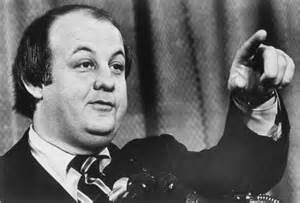
Brady1We could take the example of James Brady, the White House Press Secretary who was shot while defending Ronald Reagan. Brady served a notably conservative President, yet when faced with the debilitating consequences of his compromised condition due to gun violence, Brady became one of the leading gun control advocates of his time.

But the apparently violent motives underlying conservatism is not limited to just guns, shooting and wars. There is a violent strain that runs through so much of the rhetoric of conservatism. Another liberal victim of gun violence was Gabrielle Giffords. Time Magazine carried this observation about her shooting. “Last March, at the height of the health care Gabrielle Giffordsreform battle, Giffords’ office was vandalized. She mentioned in an MSNBC interview that a Sarah Palin graphic had depicted her district in the crosshair of a gun sight. “They’ve got to realize there are consequences to that,” she said. “The rhetoric is incredibly heated.” The corner next to her office had also become, she said, a popular spot for Tea Party protests.”

So who really has the right to be pissed in America? Is it the conservatives and Tea Party that so aggressively state their convictions and are pissed about taxes, social welfare and progressive reforms on equal rights?

Or is it the Progressives whose heroes have been randomly, pointedly and successively shot down in cold blood for standing up for the equal rights guaranteed all citizens by the United States Constitution?

There is so much opportunity for progress in America, but only if people can peacefully come to terms with the real and true history of the United States. That is, our liberal heritage is at continual risk from a violent, intolerant, often racist sector whose worldview claims to be on the right side of politics and religion, but whose words and actions stand in direct conflict with those who believe in equal rights on the political front and equal souls on the religious front.

Constellations and consternations

OrionDating back 6000 years to some of the earliest records of human civilization, cultures around the world gave name to constellations of stars in the sky. Many of these are still used by modern cultures to describe star patterns.

At one point these star patterns were considered truly divine representations of gods, goddesses or creatures that figured in the all-important mythology of people seeking cultural narrative.

Of all the constellations there is probably none more potentially significant, universal or transferable than that of Orion. The pattern of stars in the constellation Orion can be seen around the world. With its “belt” of stars across the center of the constellation, and arms and legs extended, Orion lends itself to all manner of interpretation.

For example, In ancient Egypt this constellation was known as Osiris, a character who upon being killed by an evil brother rose again to live immortal among the stars. That story hews closely to the character of Jesus Christ, who the Bible says was betrayed by one of his brother disciples only to rise again and live on it heaven.

Universal convergence

Sidney_Hall_-_Urania's_Mirror_-_Orion_(best_currently_available_version_-_2014)It is an interesting thing to consider that so many heritages seem to converge in symbolic ways. Yet there is also supposedly an advanced worldview that dismisses the constellations as having any real divine significance. Modern culture has largely dismissed the heritage of Greek, Roman, Egyptian, Asian or Scandinavian gods as “pagan” religions.

At least part of the reason we no longer abide by constellations as gods is that we recognize that constellations are not at all what they seem to the human eye. They do not exist on some flat or equal plane in space. They certainly don’t hang or conveniently travel across the so-called “dome” of heaven.

Bigger pictures

Space is an eternal, infinite place. The stars we see above our heads are literally billions of miles apart. They only appear to be fixed in space and time because our comprehension from this pinprick of a planet makes it hard if not  impossible to perceive constellations as anything other than an absolute truth. Of course many people like the predictability and familiarity of the Big Dipper hanging in the night sky. It is recognizable, constant and real.

Yet the Big Dipper is not a “thing”. It is nothing but our imaginations at work trying to find symbolism and constancy in the universe. Those stars in the Big Dipper are so far apart no human being could traverse them in a million lifetimes.

Human awareness

Orion_constelation_PP3_map_PLFor a long time in history the stars in the Big Dipper and Orion and Cygnus and hundreds of other constellations played an important role in human understanding of the universe. At the time when constellations such as Orion were recorded by early humans on rock face carvings 36 to 38,000 years ago, science was obviously not yet evolved enough to determine the real position of earth in time and space.

So we went with what we knew, and it served the human race well to establish guidelines for behavior based on ethical and moral parables in which the gods depicted in constellations sometimes played a part. They were there for everyone to see, after all. There was no escaping the gaze and wonder of gods staring down at us from above.

A single star

Eventually that notion of god above congealed into a singular deity called God or Yahweh or Jehovah. Even that singular god shares divinity with other religions such as the Muslim faith, whose early heroes include some of the same characters as the Bible. These were scriptural constellations of a sort. They share the same patterns and in some cases, the same values or attributes.

For some people, those scriptural constellations are quite literal in their conception and their place in history. For those believers, faith is fixed in the sky or the mind much like a constellation. It gives them assurance that their faith is anchored in the foundations of the universe. Their god still hangs above and their Bible or Koran is the constellation of wisdom. It shall not be moved. For those believers, accepting anything other than a literal interpretation of truth causes much consternation.

What good are they? 

It requires so much thinking to conceive the stars outside their constellations. They seem so unanchored and random in that mode. What good are stars to us if they just hang out there in the universe and do not reflect the patterns we impose on them to make ourselves feel relevant and fixed in the center of the universe?

There are people whose conception of the Bible is so literal they cannot accept what science has to say about the universe in contrast to what their religion tells them is true. They would rather believe in the fixed constellation of truth handed them by literalism than to contend with the messy, miraculous truth of life in a universe evolved from chaos and subject to laws of gravity, time and evolution that transcend the narrow worldview of constellations and consternations.

Fears and grace

Because what it all comes down to is the fear that God will not love us if we open our minds to the truth. But the gods of constellations seem to have departed once the real kingdom of God here on earth was revealed. The greatest constellation of all is love. It is what drives us to appreciate the grace of our existence in such a universe. We don’t need a pattern of stars in the sky or an outmoded take on the bible that contradicts itself in its supposed literalism and inerrancy.

You can feel free to live, to move around and find truth in the organic symbolism of scripture and not get tied into a harmful mythology that says outmoded laws and wrathful gods rule our world. We’re supposed to be brighter than that. Even Orion can tell you that.

Mitt Romney’s take on military spending fails the test of historical perspective

By Christopher Cudworth

An apparently pissed off Mitt Romney recently wrote an opinion piece about military spending in the PERPECTIVE section of the Chicago Tribune.

An apparently pissed off Mitt Romney recently wrote an opinion piece about military spending in the PERPECTIVE section of the Chicago Tribune.

When a seemingly devout believer in conservative philosophy finally builds up pressure inside his head from keeping his mouth shut fro a few months, it can be fun to see what pops out when the bubble bursts.

So it is that we find Mitt Romney giving his two cents in the Chicago Tribune PERSPECTIVE section in a Monday edition of the newspaper. The opinion piece, titled “What’s with Obama’s moves to slash the military?” throws around the principle concerns of most latter-day conservatives, which are worry and fear about our position in the world. He saves a few final gripes about government spending for last. 

The piece by Romney begins; “Russia invades, China bullies, Iran spins centrifuges, the Islamic State (a terrorist threat “beyond anything we’ve seen,” according to the defense secretary) threatens..and Washington slashes the military. Reason stares.”

He goes on to scold President Obama for his apparent inability to conceive or understand the nature and scale of these threats. Then Romney attempts the Ol’ Consrvative 1-2 punch by quoting Obama’s own words out of context to make him appear foolish, “Things are much less dangerous now than they were 20 years ago, 25 years ago or 30 years ago.” 

But that’s not all that Obama said, for he spoke more on the matter as quoted on the Pundit Press website,” President Obama maintains that the “truth of the matter” is the “world has always been messy. In part, we’re just noticing now because of social media and our capacity to see in intimate detail the hardships that people are going through.” 

Of course talk like this drives conservatives absolutely crazy because they’ve never met a crisis they could not either predict or prophesy. Well, except for 9/11 and the whole unplanned Bush-driven debacle that once was the Iraq War and now has transmogrified into a whole bunch of really pissed-off Islamic militants who are ramping up the push for a worldwide Islamic state.

Even Romney admits in his piece that “failures of imagination led to tragedy 13 years ago.” You think? How about failures to listen to simple, basic warnings about terrorist attacks and an ugly motivation to impose America’s oligarchic will on the rest of the world? Sounds a bit more like the truth, Mr. Romney. Your side screwed up and then made matters much worse by privatizing billions in military operations, sanctioned torture and conducted the entire escapade off limits from the federal budget. That’s right, Mitt, your party did not even want to be held accountable for trying to pay their way to a forced Armageddon in the Middle East to fulfill the biblical wishes of all those Red Heifer zealots dying for a chance to see Jesus come back to earth. Yes, there really were religious motivations at work in all that. 

But perhaps the Mormon faith does not buy End Times theology after all? So the Right wing has a tough time agreeing on a number of things, it seems. And these are just some of the reasons why those of us suspicious about current levels of military spending feel it’s always right to force our military to be accountable for its spending.

Yet you, Mitt Romney, seem much more concerned with slashing domestic spending than military spending. “The arguments for shrinking our military fall aside to reveal the real reason for the cut: Politicians, and many of the people who elect them, want to keep up spending here at home.” 

Yes what a terrible idea it would be to invest in in the health, education, jobs and infrastructure of America! We must suppose you have a much better idea on how to make America better? Or is it the same line Bush gave back in 2000? “Entitlements and programs are putting pressure on the federal budget: We either cut our defense, or we cut spending on ourselves. That, or raise our taxes.”

Never mind that raising the taxes on the richest Americans has led to prosperity over and over again in our nation’s history,  and that nearly every major cut on personal and corporate income taxes has led the country into recession or depression. Reagan. Bush I. Bush II. The pattern repeats itself. 

Meanwhile history and great presidents of the past give us insight on how to understand that we we need to be wise with how we fund our military lest it bankrupt the nation both fiscally and morally. 

For evidence, let us take a look at what a certain General (and President) Dwight D. Eisenhower (R) once said, “We now stand ten years past the midpoint of a century that has witnessed four major wars among great nations. Three of these involved our own country. Despite these holocausts America is today the strongest, the most influential and most productive nation in the world. Understandably proud of this pre-eminence, we yet realize that America’s leadership and prestige depend, not merely upon our unmatched material progress, riches and military strength, but on how we use our power in the interests of world peace and human betterment.”

His words encourage us to be patient and strong in our choices when it comes to military use and aggression. Eisenhower went on to explain why funding of the military was such a topic of importance: 

“In the councils of government, we must guard against the acquisition of unwarranted influence, whether sought or unsought, by the military/industrial complex. The potential for the disastrous rise of misplaced power exists and will persist.

We must never let the weight of this combination endanger our liberties or democratic processes. We should take nothing for granted. Only an alert and knowledgeable citizenry can compel the proper meshing of the huge industrial and military machinery of defense with our peaceful methods and goals, so that security and liberty may prosper together.”

And there you have it Mitt. President Obama has not said much of any different from what Dwight D. Eisenhower said back during the days when communism was deemed a threat to our nation’s security. What we need to do is plan wisely, invest in smart military plans and options, take care to maintain domestic spending as a balance of prosperity and pay attention to our global responsibility to allies and enemies.”

From the sound of your words in comparison to those of President Dwight D. Eisenhower and our current President Barack Obama, those of us who appreciate consideration as a wise strategy for war are glad for men like these, and not so glad of men seeking to undermine their patient response to threats rather than cowboy dreams and bitter condemnations by Presidents and Vice Presidents who can’t see past their own ideology when it comes to world affairs and our military. 

A symbol for rights or privilege?


Why I refuse to hide my years, my liberalism or my political views despite the new censorship age

by Christopher Cudworth

A close and longtime friend pulled me aside the other day with a warning of sorts. “I love you man,” he told me. “But you’ve got to stop giving people reasons not to hire you.” 

His advice is so well-intentioned. In the age of social media, your personal brand is how you sell yourself to others. Mine is all over the Internet. From LinkedIn to Twitter to Facebook, Google+ to all the blogs I write. My views are out there. So is my age. Plus I effectively rank all top 10 spots on Google for the name Christopher Cudworth. 

But what people really worry about most when it comes to their personal reputation is their religious and/or political views being perceived as oppositional to all those who might want to do business with them. 

I’m not afraid of that. And here’s why. 

Nothing to fear

Who lays claim to the flag in America?My years have taught me there’s nothing to fear. Not if you truly believe in God and trust that your faith will show you the way. There is no consequence on this earth that you cannot spiritually survive. Your words and actions and beliefs may indeed cost you social or work advantages.


But still, people warn you not to reveal too much about your age, your viewpoints or your religion.

The Internet is full of advice on how to hide your age, as if doing so were some kind of actual job qualification.

And surely there are plenty of people who will tell you to avoid saying anything political on business social media such as LinkedIn. 

I am 57. I am a liberal. And a Christian. Or both.

Chicken to speak out?

Pretty much this brand of advice seems to be focused on connecting with people who make business choices based on religious or political views.

But it works both ways. Certainly the recent stories about Chick-Fil-A choosing to fund non-profit organizations aligned with its company views have impacted their reputation. Rightly or wrongly, consumers often choose to base their decisions on who to support based on liberal or conservative views. Then it came out that Chick-Fil-A even hires or chooses franchisees based on their core values. That seems like a pretty sound business principle. But again, they took flack for those practices because the social media flurry took off before the full breadth of the company’s policies was vetted. 

There was some debate that went on about this issue on LinkedIn and I commented about that. Advisable or not, I expressed concern that some companies might use policies like that to be exclusionary in their hiring. But it’s a gray area. According to Snopes.com, this is what actually appears on the Chick-Fil-A website as to company culture: “The Chick-fil-A culture and service tradition in our restaurants is to treat every person with honor, dignity and respect — regardless of their belief, race, creed, sexual orientation or gender. We will continue this tradition in the over 1,600 Restaurants run by independent Owner/Operators. Going forward, our intent is to leave the policy debate over same-sex marriage to the government and political arena.” 

Fair enough. That’s a fairly conservative enough statement about hiring practices. I mean that in the best way. It’s not Conservative in the sense that it is outlining some political view as necessary to employment. It is conservative in the sense that it advocates fair and reasonable hiring practices. There are other forms of conservative viewpoints at work in business as well. 

Creative creationist

For example, I once knew a geologist who was a devout creationist. The thought of his worldview at work in that field was astounding to me. Creationists typically view the earth as having a very limited time span. I asked the man specifically for his opinion about that. “All I care about in the job is the layers. I just need to know where things are. How old they are does not matter to me.”

I thought about those words for a long time. He’d been through all that geological education and processed it in his own fashion. He was not a man afraid to speak his mind either. At some point he likely spoke up about his beliefs. Surely some of his science education professors shouted him down if he brought up his religious views and the opinion that the earth’s geology was all the product of the Great Flood. Or whatever. Yet he’d kept true to his anachronistic worldview despite all contentions to the contrary. And he was successful in his profession. 

That’s a conservative, tried and true I suppose. He’d held his convictions and stuck to religious tradition despite all that liberal science stuff swirling around him.

Equivalence

In a similar way, I suppose, I have clung to my liberal views despite all the Conservative opinion dominating the business world. Am I, as a Liberal, the equivalent of a Creationist in the business world? Am I denying the science of economics and business. Are Harvard or Booth School MBAs gathering in coffee shops to snigger about my naive notions about business? 

Well, I can only speak from personal experience in my business dealings, where my conservative instincts have always controlled my actions.

Conservative actions

For example, when I was elected President of the Chamber of Commerce in Batavia, IL., my primary goal was to make the organization run more efficiently than it had been for years. I moved to cut the Board from 20 down to 11 members. Then I required that all events and activities of the Chamber have a budget. Surprisingly, that was a new policy to everyone. When it was all said and done, we’d also created all new marketing materials for the Chamber and provided a guarantee of a prescribed set of services to all members that helped increase the membership.

 All those could be characterized as policies indicative of a Conservative mindset. Cutting staff or representation to a manageable size, reducing waste and increasing accountability and finishing with a financial cushion, all are in line with a conservative approach to business. 

Fairness

My personal liberalism primarily enters business when it comes to issues of fairness. Because I believe, like the conservative entity known as Chick-Fil-A, that it is not just important but a requirement  “to treat every person with honor, dignity and respect — regardless of their belief, race, creed, sexual orientation or gender.”

At one point during my career in marketing, the organization where I worked had built a reputation for sexual harassment. A few lawsuits had been filed and won against the company. One day while riding back from lunch with co-workers a young woman began relating to us that her boss had made multiple inquiries into what she wore under her work clothes, what type of relations she had with her boyfriend and other types of sexual innuendos. I took the step of networking through a friend in law who helped her find a lawyer to represent her interests with the company. She sued and won, then left the company. 

Was that a conservative or liberal action on my part? It was both. In truth I was protecting the company’s interests while protecting the interests of the young woman subject to the harassment. I did not take matters into my own hands but providing assistance to legally assist the young woman find a recourse for her situation. 

Culture clashes

PaversBut the real issue for me was not just that young woman’s situation. The company maintained a culture of harassment in many other ways. The President made frequent statements that were designed to intimidate and offend for purposes of control. “Bring in the Design Fairies,” he once blurted while meeting with a group of creative directors. Comments like that were not complimentary to the staff, as if they were magically endowed with the ability to solve creative issues. Instead he regularly issued statements devaluing the talents of design staff, intimating that their sexuality had much to do with their station in life as lowly designers.

That rankled my liberal instincts on so many fronts it was tough to keep composure sometimes. 

Religious blows

Even bosses trying to be the pillar of conservative values can blow it sometimes as well. One director at a media company issued a written statement titled The (Company) Way, The Truth and the Light. A number of employees raised concerns that he should be using a biblical construct in the context of company policy. There was enough rumbling among the ranks that as marketing manager I brought the concerns to light in a leadership meeting that week. The reception of this feedback was less than welcome, and when someone stapled a picture of Jesus to the company memo and sent it to the corporate headquarters, the director was determined that some heads should fall. He called me into his office accusing me of sending the memo. “No one can criticize my faith,” he blustered to me. “I go to church every week!”

Indeed he did. But it did not stop him from forcing me out of the company for bringing up the issue in the first place. My liberal instincts toward free dialog and problem-solving had gotten me into trouble once again. 

Public opinion

When I accepted a job as editorial writer for a major newspaper it was with joy and expectation that we debated issues on a weekly basis. My fellow staff writers were long-experienced journalists with a highly objective bent earned from years of street and business reporting. We criticized each other’s work, which ultimately had to pass muster with the Publisher and Editors, a strong mix of leadership with both liberal and conservative views. 

We also edited for space the writing of both conservative and liberal columnists including the likes of George Will and Ann Coulter. Tasks like that help you learn to appreciate the constructs of the arguments they make, and find ways to make sure their columns do not suffer for the editing. 

Balance

So it has been with a critical eye that I have proceeded in my career while examining the conservative and liberal facets of society. We need both. But we need a balance. 

Yin and yang symbol.

That much I learned as a member of the highly conservative Missouri Synod Lutheran Church. For 25 years our family attended services and I served on the Board, taught Sunday School and led activities for that church including 5 years in the Praise Band translating music into theology. At one point I led a search committee for a new praise leader and set some parameters for the committee at which some members bristled. “We’ll meet one hour, once a week,” I told them. “And we’ll get our business done.” 

In 8 weeks we had vetted the criteria, interviewed candidates and made a selection from amongst 8 different praise musicians. And then we waited. And waited. It took the church another four months to approve the choice. The conservative opinion was that we’d actually proceeded too quickly in doing our business. “We need time to think,” I was told. And then the backroom meetings began. It was as if the entire search enterprise had to be done all over again. Finally the hiring of our candidate was accomplished. But the experience left a sour taste in the mouths of all on the committee including the Pastor Emeritus, a 60-year veteran of Missouri Synod pastoral duties who proclaimed, during one of the meetings, “This is the best committee on which I’ve ever served.” All were in agreement.

That success was undercut by a suspicious, highly conservative worldview that believed itself better able to do the job than the committee elected to perform its duties.

Pounding fists

I’d run into that kind of logic before at the same church. We’d gone to the congregation twice already with budgets that were approved for construction of an addition using money donated by a wealthy member who died and left her fortune to the church. The church board was worried the congregation needed to hear the whole story again. I pounded my fist on the table and barked, “It’s already approved. We need to move forward.” The Pastor pulled me aside the next Sunday and thanked me for having the courage to speak up. We built the new addition and moved forward. It wasn’t a risk to do all that. We’d already done all the work necessary to guide and improve the plans.

So that raises an interesting question: Was I too liberal for wanting to move forward rather than remain stuck in our cycle of constant equivocation? I’m not afraid to take risks. I’m not afraid to propose creative ideas. I’m not afraid to pound my fist on the table and demand progress, productivity and accountability. 

Consideration

photo (1)I do however respect and appreciate the need for review and consideration before action. That’s why I like the foreign and domestic policy of our current President, Barack Obama. He thinks about what he does before doing it. Our country has not embarked on any new ideological war games as a result. Supporting that kind of conservative, considerate approach makes me a liberal according to some. Some call it namby pamby wimpass liberal stuff. I call it intelligent reasoning and a moderate approach to international challenges. The forces we’re fighting in the Middle East have been there for 800 years or more. We’re not going to solve them overnight. That’s not conservative or liberal. Flailing around for quick solutions is just dumb. We’ve already tried that and look how Iraq turned out. 

So it disturbs me that some people might sit out there in judgment of my political views as too liberal when in fact they are much more conservative in nature than liberal. I think the same way about the environment and conservation. Protecting the earth is a conservative, not a liberal thing to do. 

Liberal faith

I also think that way about matters of faith, where social justice and working to provide equal rights to all comes first. That worldview aligns precisely with the biblical truth of Jesus Christ. From what I’ve read––and I’ve read the Bible cover to cover several time over, studied it groups and read hundreds of books on the topic o faith–– my liberalism aligns with the core truths of all religions except where conservative ideology steps in to make rules about how to live and who to tolerate. That’s an ugly form of conservatism that has led to Nazi Germany, the Spanish Inquisition, the Crusades and the KKK. Not all conservatives are extreme of course. But it does makes me wonder why anyone is willing to call themselves conservative without first taking a close and studied look at what that means now and what it has meant in the past. Even the conservative wing of the Catholic Church has been repeatedly wrong about things, including the position of the earth in the solar system, for one notable mistake. 

Conservative consequences

When you examine what so-called modern conservatism has wrought the last ten years it makes you wonder why anyone would be proud to call themselves conservative at all. Or perhaps they’re not really getting their point across to the people in power. The Bush administration ran amok with wars and de-regulating the economy, reducing taxes and pushing constrictive policies on American education. Conservatives seemed to say nothing about all that. 

Yet when the economy tanked thanks to all that reckless behavior it was liberals who stepped in to mop up the mess and put things back in order. We’re not out of the woods by any measure. The economy could still tank. But that’s not a product of liberal policy. That’s a product of refusal to change or require accountability of organizations acting out of control in the financial world. That world is still run primarily by financial conservatives who bristle at governmental intrusion. 

Holdouts and bailouts

What was the first response of banks and lending institutions following the economic crash? They refused to lend money even to successful businesses. That was not some liberal scheme. In fact some wondered if it was a conservative punishment doled out in response to the election of a supposedly liberal president. 

That President bailed out the auto industry and put strict controls in place to restore and revitalize American auto companies. Those were highly disciplined, conservative measures to require accountability. 

Ageless principles

IMG_6475So I simply don’t buy the idea that it is my responsibility to apologize for my liberal background and beliefs. I also don’t buy that I’m too old at 57 years of age to be a contributing member of society or a business leader. Most of our Presidents and business leaders don’t become CEOs or leading politicians until their 50s and 60s. 

Yet we’re told all the time that we have to hide our age on our resumes lest a company be discouraged from hiring us. I say bullshit. It’s not my problem that my experience and my creativity are at an all-time peak. Some companies don’t want to hire people like me because they think people my age too expensive compared to hiring some younger candidate. I’m all for that too, if it fits the bill. But from an employee’s perspective you can’t buy experience or learn how to effectively apply creativity to creating business solutions. That comes with time. 

And do we actually think we can hide our age in this day and age? Do we think hiring managers and HR directors are so stupid they can’t do a simple Google search and find out when you graduated from college? Give. Me. A. Break. 

So-called “Age-Proofing” your resume is a game no one should play. The companies and hiring managers that use age as a determining factor in hiring are literally breaking the law. Do you want to work for a company that willingly breaks the law as a matter of its business practices? That’s the question and the challenge we should be putting to all businesses. Why do you think its okay to carry on with those practices when they are against the law? 

3C Creative Content

So I’m running my own little business now and it’s going okay especially because I’m able to purchase reasonably priced health insurance thanks to Obamacare. I’m even improving my policy some now that the company is moving forward. I wanted to do this years ago but couldn’t because my wife had ovarian cancer and we could not buy insurance on our own because her pre-existing condition precluded us from doing so. Obamacare changed all that. For now. 

Because we hear all kinds of conservative politicians threatening to “roll back Obamacare” if the Senate goes Red. But do they know what they’re really talking about? I don’t think so. The liberal convictions of that law are providing safety and security in health care to millions of people. Society has not collapsed since the law was installed. In fact millions of Americans including small business owners like me––and I employ my 24-year-old daughter as well––can now get health insurance and run their business without worrying that they can’t get insured. 

To me that sounds a lot like the American Dream and the American Way. Which is liberal. Defined as: 

  1. broad-minded: tolerant of different views and standards of behavior in others
  2. progressive politically or socially: favoring gradual reform, especially political reforms that extend democracy, distribute wealth more evenly, and protect the personal freedom of the individual
  3. generous: freely giving money, time, or some other asset

Yet we hear advice all the time, “Don’t be too political” or “Don’t discuss religion” online or in public because people won’t hire you if you express your opinions. I say that’s an insidious form of new censorship. It’s not why I’m alive. Or you. Or anyone. This is America. Expressing opinions is healthy even if they’re wrong. That’s the only way you learn. 

Do you want an employee who just sits there in company meetings and refuses to contribute because they’re afraid something they say might appear stupid or be wrong? That doesn’t help anyone. And do you want an employee who kisses your ass simply to get ahead or do you want an associate who can challenge you to better things, better ideas and better profitability? All those are liberal, not conservative instincts. And they make better employees. 

Liberal lectures

So you can lecture me all you want about how liberals like me don’t fit into the business world. You can tell me I’m told old (though I can likely kick your ass on the bike and in a race…can you do a 12:00 two mile?) or getting slow or “too set in our ways. 

What a load of fucking crap. Never in the history of the human race has there been a generation of people more willing to experiment and redefine themselves, learn new technology and adapt to circumstances. That extends from the youngest kids in the workforce to the oldest. Everyone’s learning. The only ones unwilling to learn and change are those too conservative to try. That’s why I’m a liberal too. 

True Convictions

I believe that Jesus loved people like me for the willingness to take on injustice in the workplace, to respect the time of others and to make decisions with a conscience clear of political ramifications and conniving conservatism. Jesus hated all that rot and told the Pharisees to go choke on it. 

They hung him on a cross to try to shut him up. But somehow things didn’t work out that way. His liberal, radical message of spiritual creativity lives on to this day. It is ours to keep it alive in the face of those who think rules and power and control and money are more important than knowing love, and loving life. That includes loving what you do in the workplace. 

I’ve written a book about the process of loving life, and living it well in the face of considerable obstacles. It’s called The Right Kind of Pride. It focuses on what it’s like to get through cancer as patient and caregiver. But it’s about much more than that. It’s about the balance of conservative and liberal instincts that make it possible to thrive. 

I’m always going to be proud to be a liberal. Life has not made me more cynical or apt to hew conservatively as if being cranky and controlling is the sign of a more realistic outlook.

If being more open-minded yet practically focused exclude me from doing the job for you, then it’s your loss. I know for a fact that I can do a great job on anything I set out to do. I’m confident of that, and I’ve proven it, and no amount of supposed discouragement can keep me from moving ahead. 

The Genesis Fix.